When the President Became a Surveillance Target
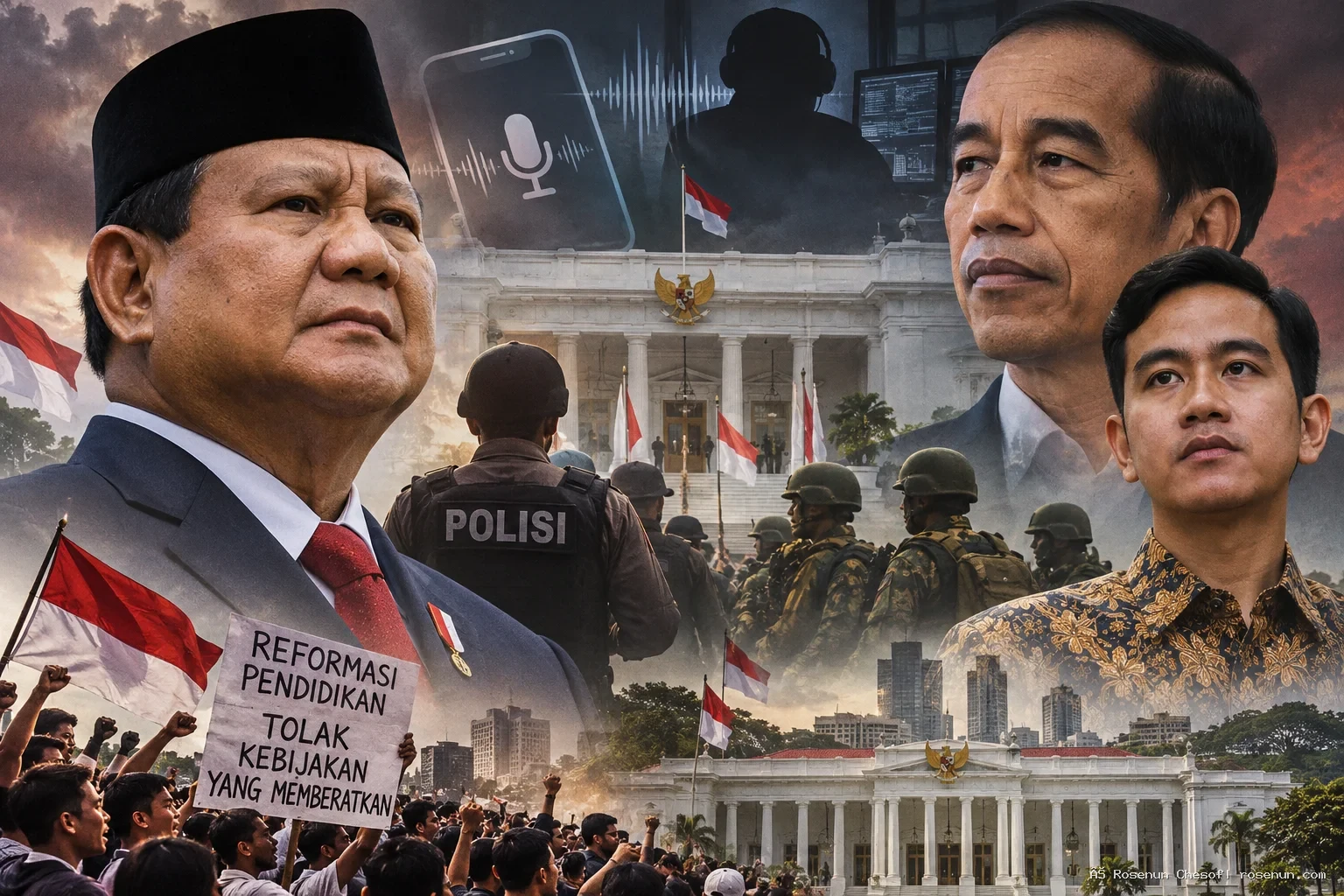
In early November 2026, Indonesian politics was rocked when police arrested three senior officers on charges of illegally wiretapping President Prabowo Subianto, along with ministers, politicians, journalists, activists, and businesspeople.
One of the suspects is General Listyo Sigit Prabowo, a former national police chief who, at the time, served as the president's Chief of Staff and is known to be close to former President Joko Widodo (Jokowi).
Police say the wiretapping took place between 2025 and 2026, bypassing legal procedures, and that surveillance records were deleted in October — a move that could amount to evidence tampering. On November 6, Reuters reported that police had named a fourth suspect, Slamet Uliandi, a former IT official at the Criminal Investigation Agency, accused of authorizing the wiretapping and ordering the deletion of records.
Investigators have yet to establish a clear motive, and there is no evidence that Jokowi ordered or was involved in the operation. Prabowo dismissed Listyo immediately after the arrest, while Jokowi, in a brief statement, said he respected the legal process. Although the case remains unresolved, the political connections of those implicated have pushed the story beyond simple police misconduct into questions about the relationship between the current president and his predecessor.
From Rivals to Allies — and Now Possibly Fractured
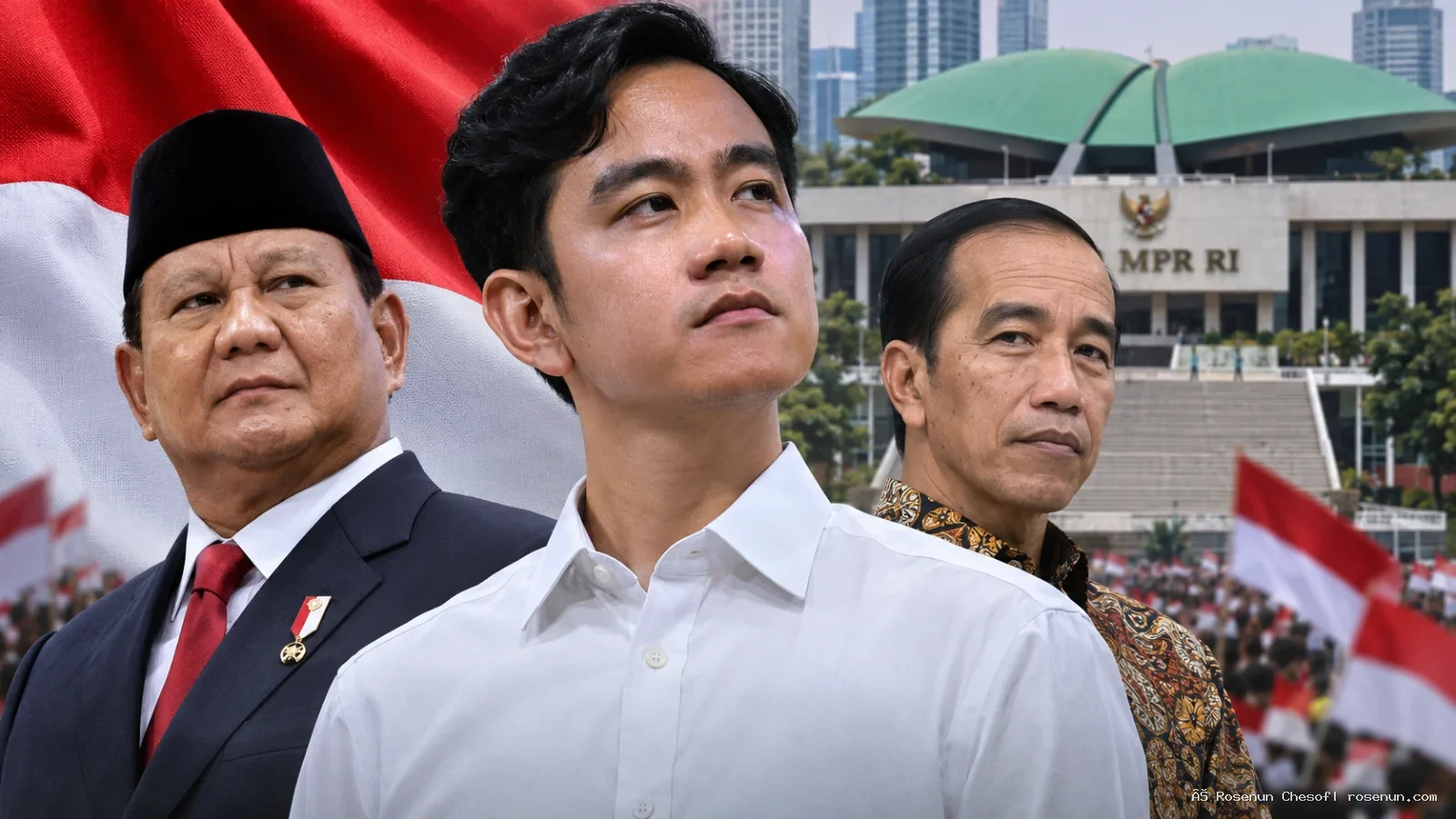
Prabowo and Jokowi competed against each other in the 2014 and 2019 presidential elections, with Jokowi winning both times. But after 2019, Jokowi appointed Prabowo as defense minister, turning a political rival into a governing ally and helping ease tensions between the country's major political camps.
That partnership deepened in 2024, when Prabowo ran for president with Jokowi's son, Gibran Rakabuming Raka, as his running mate. The alliance gave Prabowo access to Jokowi's political base, while keeping the Jokowi family close to the center of power even after Jokowi's constitutionally mandated two terms ended.
But being allies hasn't meant their interests always align. ABC Australia reports that cracks have emerged through budget cuts to the Nusantara new capital project — a flagship initiative under Jokowi — and through Gibran's relatively limited role within the administration. Prabowo, for his part, has his own reasons to build an independent power base, having come to office riding on his predecessor's network. The relationship, then, has shifted from an alliance built to win an election into a negotiation for power between two leaders with their own distinct bases of support.
What the Case Reveals About Police Power
A question just as important as the Prabowo-Jokowi relationship is this: under what oversight can senior officials access and use the state's surveillance systems?
According to the AP, the suspects allegedly used the Lawful Interception Management System (LIMS) without going through the required approval process. If proven, the problem wouldn't be limited to a breach of the president's privacy — it would point to state resources being used to surveil people who were never under any lawful criminal investigation. And because the list of targets reportedly included journalists and activists, the case carries implications for press freedom and freedom of expression as well.
Amnesty International has voiced concern that unauthorized wiretapping could violate human rights, while National Police Chief Suyudi Ario Seto has insisted the investigation is a matter of law enforcement, not political maneuvering. The gap between officials' statements and analysts' suspicions points to the real challenge ahead: making the investigation transparent enough to convince the public that the law isn't being used as a tool to eliminate political rivals. This case may well become a major test of police accountability in Indonesia.
Gibran and Questions Over the Jokowi Family's Political Future
As the wiretapping scandal shakes the government, Vice President Gibran Rakabuming Raka is facing his own controversy — over the educational credentials he used to run in the 2024 election. Reuters and Channel NewsAsia report that the dispute stems from a court ruling concerning the recognition of a foreign high school diploma used in his candidacy filing. Lawmakers from several parties are now considering a parliamentary inquiry into the matter, which, if formally pursued, could escalate into a constitutional accountability review — and potentially an impeachment process.
For now, though, this remains at the discussion stage, not an actual impeachment. Prabowo's coalition still controls roughly 81% of parliament, making the ruling bloc's stance decisive for any further action. The issue matters far beyond a paperwork dispute: the vice presidency is the Jokowi family's main channel for remaining at the center of power after 2024. If Gibran's position is seriously challenged, it would reshape the entire network of relationships built around it. Still, linking this dispute directly to the wiretapping case would be premature — there's no evidence so far that the two are part of the same coordinated plan.
20,000 Troops and a Historical Memory
Another development drawing attention is the deployment of more than 20,000 troops into Jakarta, timed closely with the wiretapping scandal. The AP reports that the military described this as a routine security preparedness measure, with most troops held in reserve rather than deployed on the streets, and officials cautioned against linking the move to the wiretapping case without evidence.
Still, a large military presence in the capital inevitably draws scrutiny in a country with a complicated history of military involvement in politics — from the Dwifungsi ("dual function") doctrine under President Suharto (1967–1998), when the armed forces held both security and administrative roles, to the post-1998 Reformasi era, which sought to pull the military out of civilian politics. The question worth watching is whether the government can maintain public security without letting the military's role expand further into civilian political space than necessary.
Pressure From the Streets
While the Prabowo-Jokowi relationship draws scrutiny, the government also faces protests from students and civil society groups in several cities, over the cost of living, education budgets, policy priorities, and the handling of forest fires and haze. These protests aren't directly connected to the wiretapping case, but taken together, both situations reflect the parallel pressures facing the Prabowo government — uncertainty within its political alliance, and public dissatisfaction with governance. The government's stability, then, doesn't depend solely on balancing power among elites, but also on its ability to respond to the public's grievances.
Could This Political Rift Hit the ASEAN Economy?
Indonesia is ASEAN's most populous country and largest economy, which makes policy continuity there a concern for both investors and neighboring states. This crisis is unfolding amid existing worries over investor confidence, the rupiah's value, and the cost of Prabowo's economic and welfare policies. ABC Australia notes that public discontent also extends to forest-fire management and land disputes.
That said, it would be premature to treat the wiretapping case as a direct cause of economic volatility — financial markets are shaped by both domestic and external forces. What happens next depends on whether this political conflict disrupts policy continuity and investment decisions. Regionally, Indonesia also plays a key role in coordinating ASEAN's positions on Myanmar, the South China Sea, and relations with major powers. If the government is forced to spend significant political capital managing domestic conflict, that regional role could weaken — though there's no evidence yet that it already has.
Conclusion: A Transition of Power Still Unfolding
The wiretapping case against President Prabowo is exposing the complexity of Indonesia's power structure — one that isn't just about party competition, but also entangles personal networks, security institutions, and relationships spanning multiple generations of leadership.
The Prabowo-Jokowi partnership once brought political stability and delivered victory in 2024. But as Prabowo governs on his own political footing, differences in interests and policy direction have started to surface. The arrest of a former national police chief, the dispute over Gibran's qualifications, and the troop deployment in Jakarta should be read together as part of the same political context — even though there's no proof yet that they are coordinated or share a common goal.
What matters most going forward isn't the personal relationship between Prabowo and Jokowi, but whether state institutions can carry out justice independently and maintain checks and balances under political pressure. Ultimately, this crisis may become a test of whether Indonesia can manage conflict among its ruling elite through democratic mechanisms — without letting elite rivalry erode public trust in the country's institutions.
Sources
- Reuters (Nov 6, 2026) — Indonesia names fourth senior police officer as wiretapping suspect
- Reuters (Nov 5, 2026) — Wiretapping probe a matter for law enforcement, parliament weighs inquiry into VP
- ABC Australia (Nov 6, 2026) — What an alleged wire-tapping scandal says about Indonesia's most powerful men
- The Jakarta Post (Nov 6, 2026) — Wiretap scandal threatens Prabowo-Jokowi alliance
- AP (Nov 4, 2026) — Indonesia deploys troops to boost Jakarta's security after generals' arrest
- AP (Nov 5, 2026) — Thousands of troops secure Indonesia as tensions run high over wiretap scandal
- Channel NewsAsia (Nov 5, 2026) — Indonesian police say wiretapping probe a matter for law enforcement
- ANTARA News (Nov 4, 2026) — Prabowo informed of illegal wiretapping, minister says