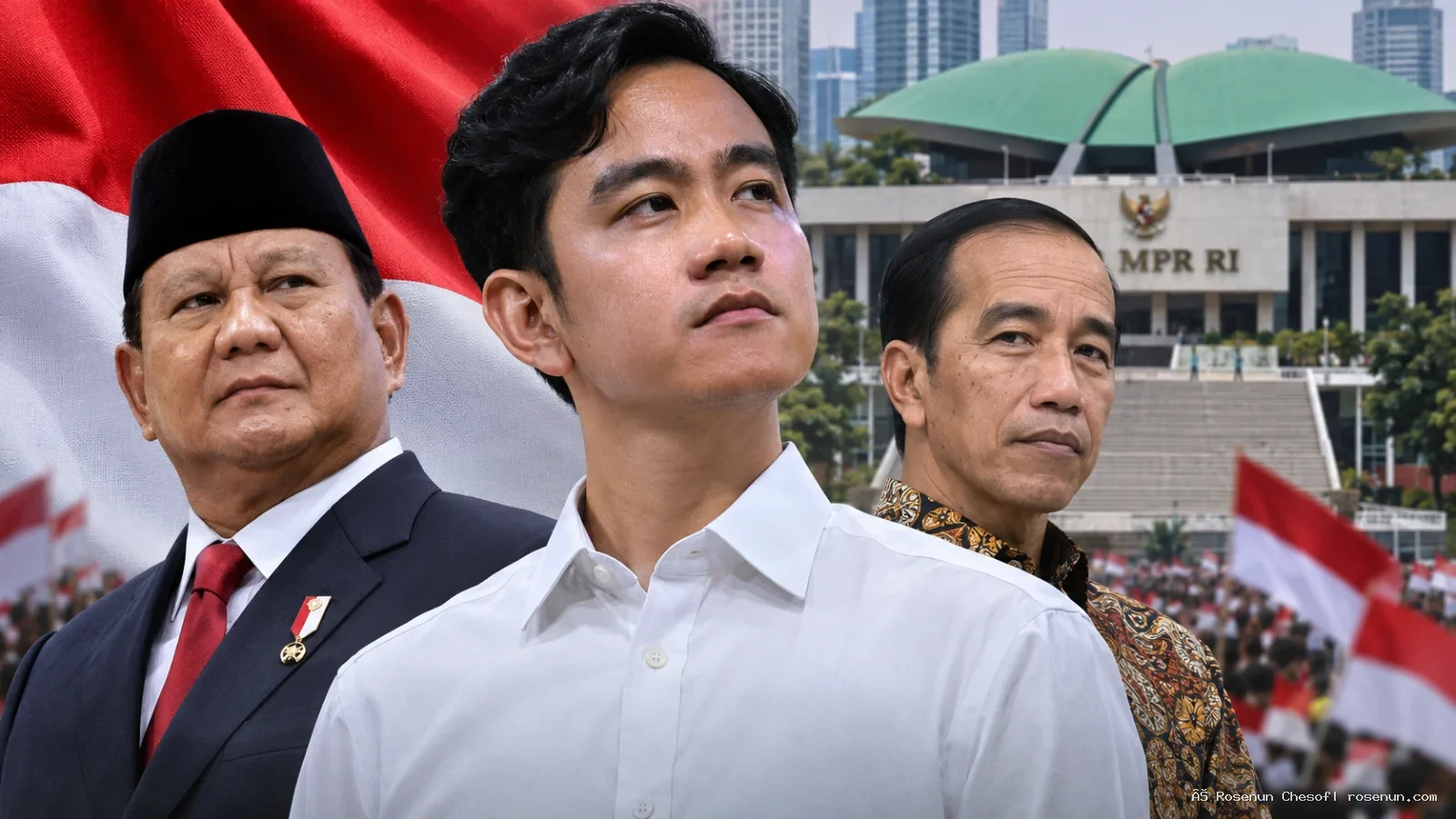
On 12 November 2026, Indonesia’s Vice President Gibran Rakabuming Raka, the 39-year-old eldest son of former President Joko Widodo, popularly known as Jokowi, submitted his resignation to President Prabowo Subianto and the People’s Consultative Assembly (MPR), just two years into his five-year term.
Prabowo accepted the resignation, expressing appreciation for Gibran’s contributions to his administration. Jokowi, meanwhile, reaffirmed his continued support for Prabowo’s government.
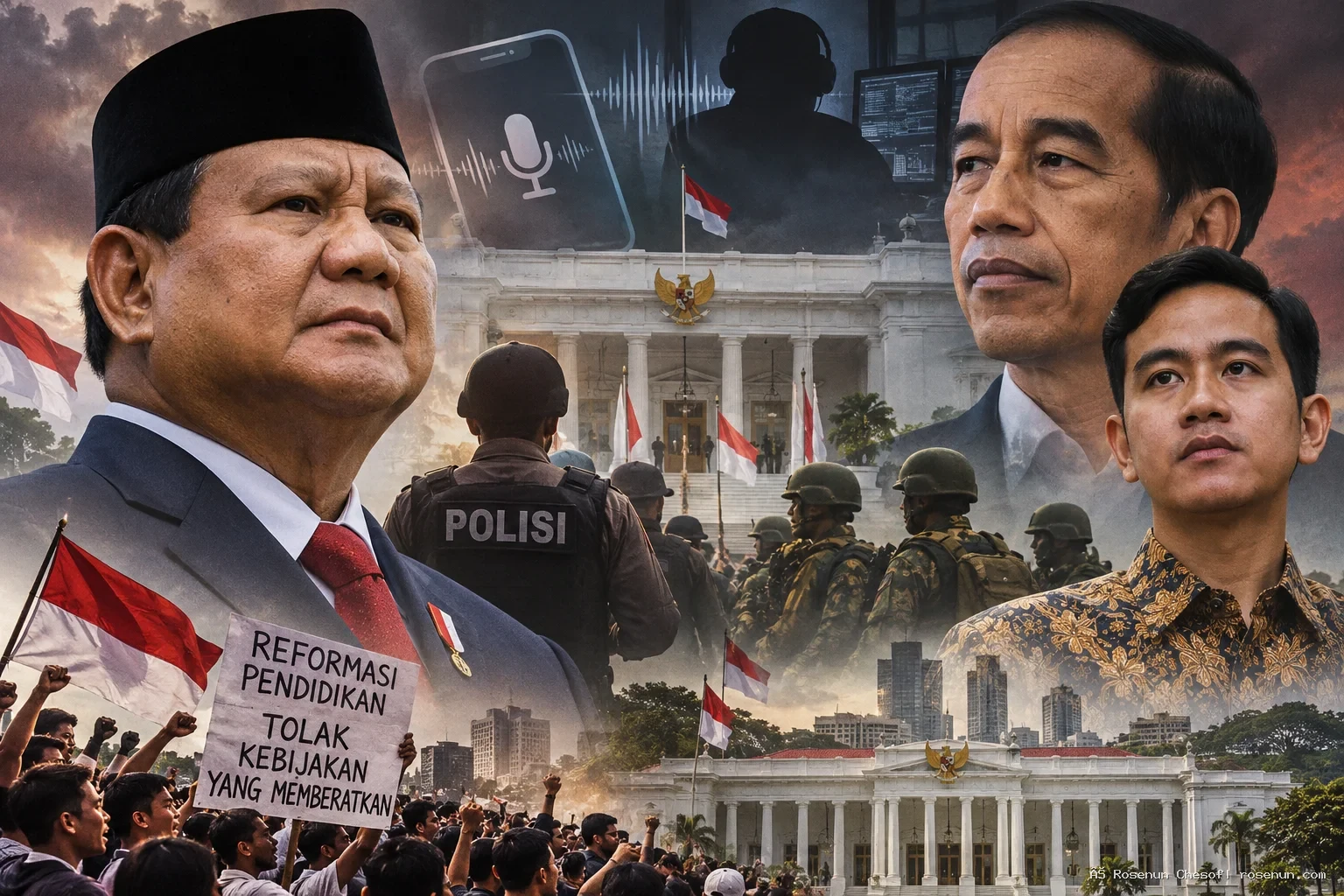
Despite efforts by both sides to project political unity, Gibran’s departure comes at a particularly sensitive moment for Indonesia, as the country faces economic pressures, political uncertainty and a wiretapping scandal involving senior officials.
From an Educational Credentials Dispute to Resignation
The immediate pressure behind Gibran’s resignation stemmed from a legal controversy surrounding his educational qualifications for the vice presidency.
Having studied in Singapore and Australia, Gibran became the subject of a legal dispute over the official recognition of his qualifications as equivalent to an Indonesian senior secondary school diploma.
On 6 October, the Constitutional Court dismissed a petition challenging his eligibility on the grounds that the applicants lacked legal standing. However, on 30 October, the Supreme Court invalidated the document certifying the equivalence of his educational qualifications.
The ruling intensified political pressure in parliament, prompting lawmakers to pursue impeachment proceedings against the vice president.
Gibran maintained that his resignation was a personal decision made in the national interest and to ensure the continuity of government, rather than an admission that he had failed to meet the legal requirements for office.
The controversy also revived questions that had surrounded his candidacy since the 2024 presidential election: to what extent was Gibran’s rise to power shaped by established legal procedures, and to what extent did it benefit from political connections?
From Political Rivals to Strategic Allies
The relationship between Prabowo and Jokowi represents one of the most significant political realignments in Indonesia over the past decade.
The two men were rivals in the 2014 and 2019 presidential elections, both of which Jokowi won. Following the 2019 election, however, Jokowi appointed Prabowo as defence minister, bringing his former political opponent into the government.
Their relationship evolved further during the 2024 presidential election, when Prabowo selected Gibran as his running mate.
At the time, Gibran was only 36 years old, below the minimum age requirement of 40 for presidential and vice-presidential candidates. However, a Constitutional Court ruling in October 2023 introduced an exception allowing individuals who had held elected regional office to stand for election.
The ruling paved the way for Gibran, then mayor of Surakarta, to join Prabowo’s presidential ticket. It also attracted widespread criticism over potential conflicts of interest and the growing influence of political dynasties in Indonesia.
For Prabowo, the partnership offered access to Jokowi’s extensive electoral support. For the outgoing president, having his son occupy the vice presidency provided a potential means of retaining political influence beyond his own term in office.
Gibran thus became more than a vice president. He embodied an alliance between two of Indonesia’s most influential centres of political power.
The Wiretapping Scandal and Emerging Political Fault Lines
Gibran’s resignation comes amid an investigation into the alleged illegal surveillance of President Prabowo involving senior Indonesian officials, including former National Police Chief Listyo Sigit Prabowo, who has been widely regarded as a figure close to Jokowi.
Police have indicated that preliminary evidence could support possible treason charges against suspects in the case. These allegations, however, remain subject to investigation and have yet to be established in court.
There is currently no confirmed evidence that the wiretapping scandal directly caused Gibran’s resignation.
Nevertheless, the two developments raise broader questions about the evolving relationship between the former president’s political network and the current administration.
Gibran’s departure could weaken Jokowi’s influence within the executive branch while giving Prabowo greater freedom to appoint a deputy more closely aligned with his own political and administrative priorities.
Yet both Jokowi and Gibran have publicly reaffirmed their support for the government, suggesting that the resignation should not necessarily be interpreted as a definitive rupture between the two camps.
The more significant question is whether the political arrangement that once served their mutual interests remains as valuable to both sides as it was in 2024.
Who Will Become Indonesia’s Next Vice President?
Under Indonesia’s Constitution, a vacancy in the vice presidency does not require a new general election.
Instead, the president nominates two candidates, from whom the People’s Consultative Assembly selects a successor. The process must be completed within 60 days of the position becoming vacant.
On 13 November, MPR Speaker Ahmad Muzani announced that the assembly would select a new vice president on 2 December 2026.
Prabowo’s choice of nominees will offer an important indication of the future relationship between the two political camps.
Should the candidates maintain close connections with Jokowi’s political network, their nomination could signal an effort to preserve the existing alliance and its internal balance of power.
Conversely, candidates drawn primarily from Prabowo’s own political circle could point towards a broader consolidation of presidential authority and a reconfiguration of the governing coalition.
The selection process will therefore be about more than filling a constitutional vacancy. It may reveal how Prabowo intends to shape the remainder of his presidency.
The End of an Alliance or a Reconfiguration of Power?
Gibran’s resignation comes at a challenging time for Indonesia, with the government facing growing concerns over investor confidence, economic pressures and political stability.
On 12 November, the Indonesian rupiah weakened to 18,255 against the US dollar, reaching a record low at the time and underscoring the broader economic uncertainty confronting the country.
As Southeast Asia’s largest economy and most populous nation, Indonesia’s political stability carries implications well beyond its domestic political landscape. Its ability to maintain effective governance and economic confidence is also significant for the wider ASEAN region.
Gibran’s resignation is therefore more than a change in executive leadership. It marks a turning point in the political architecture built on the strategic compromise between Prabowo and Jokowi. The alliance that once played a decisive role in securing Prabowo’s presidency now faces a fundamental test: whether the shared interests that brought the two leaders together remain sufficient to sustain their political partnership.
For Prabowo, Gibran’s departure presents an opportunity to consolidate his own power base and reduce his dependence on the former president’s political network. For Jokowi, it poses a significant challenge to maintaining his political influence now that his son no longer occupies a key position within the executive branch.
The selection of a new vice president on 2 December will therefore be more than a constitutional procedure. It will serve as a defining indicator of Indonesia’s evolving political order, revealing whether the country will continue under the existing alliance or enter a new era in which Prabowo no longer needs to rely on Jokowi’s political influence to sustain his presidency.