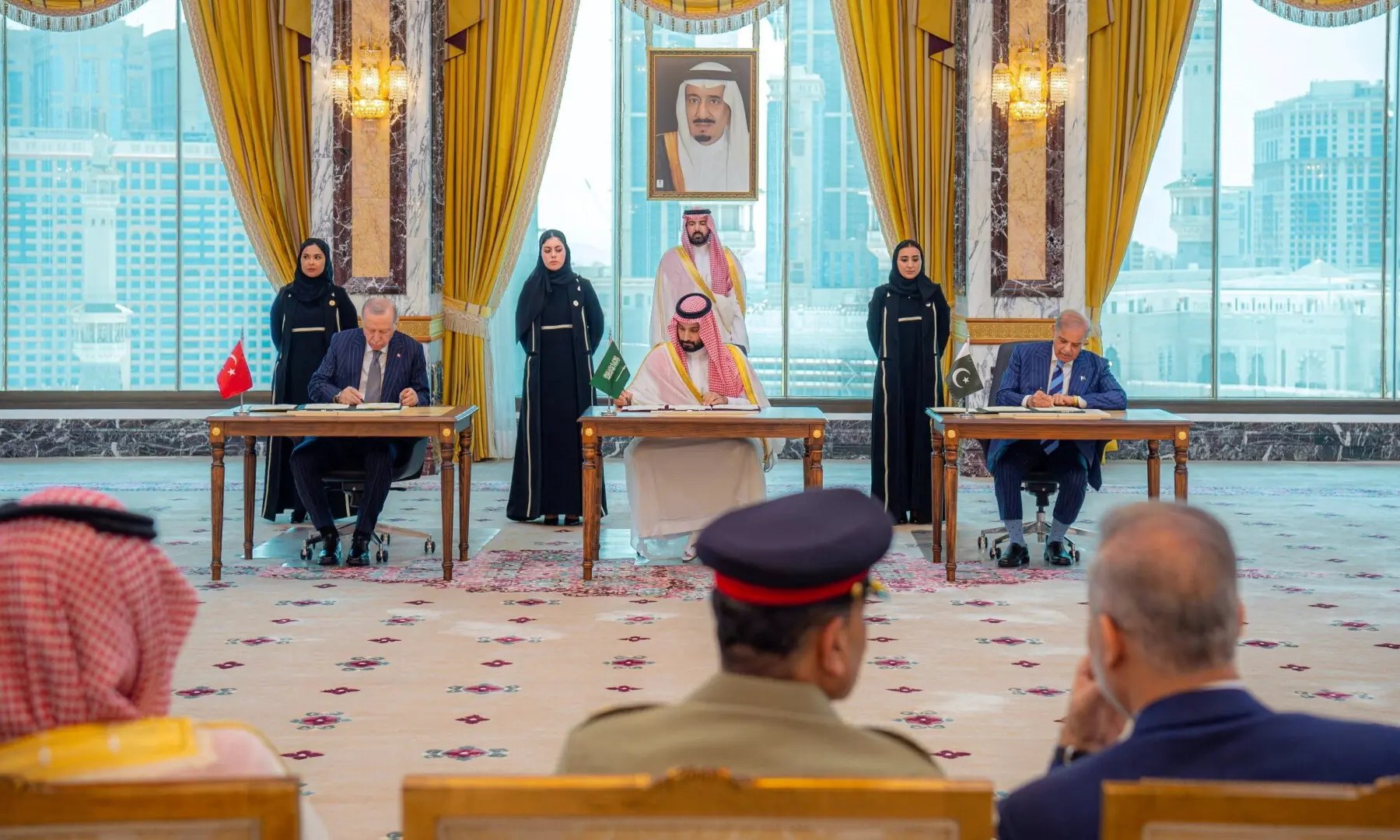
เมื่อวันที่ 7 สิงหาคม 2026 ซาอุดีอาระเบีย ตุรกี และปากีสถาน ได้ลงนามใน ข้อตกลงป้องกันร่วมมักกะฮ์ (Makkah Joint Defence Agreement) ซึ่งนับเป็นพัฒนาการสำคัญของภูมิรัฐศาสตร์ในเอเชียตะวันตก โดยเฉพาะหลักการสำคัญที่กำหนดว่า การโจมตีด้วยอาวุธต่อประเทศสมาชิกประเทศหนึ่ง จะถือเป็นการโจมตีต่อสมาชิกทั้งหมด
สำหรับ Dr. Maszlee Malik อดีตรัฐมนตรีว่าการกระทรวงศึกษาธิการมาเลเซีย และปัจจุบันดำรงตำแหน่งประธาน International Institute of Advanced Islamic Studies (IAIS) Malaysia ข้อตกลงดังกล่าวมิได้มีความหมายเพียงการสร้างพันธมิตรด้านความมั่นคงระหว่างสามประเทศเท่านั้น หากยังเป็นสัญญาณของการเปลี่ยนแปลงโครงสร้างอำนาจในระดับภูมิภาคและระดับโลก
ในบทความ The Makkah Defence Pact and Its Strategic Implications for Malaysia in a Multipolar World ซึ่งเผยแพร่ใน IAIS Policy Insight เดือนสิงหาคม 2026 Maszlee มองว่า การเกิดขึ้นของสนธิสัญญานี้อาจส่งผลโดยตรงต่อการแข่งขันทางเศรษฐกิจและยุทธศาสตร์ระหว่างสหรัฐอเมริกากับจีน และเป็นอีกหนึ่งสัญญาณว่า “ยุคโลกขั้วเดียว” กำลังผ่านพ้นไป ขณะที่ระเบียบโลกแบบหลายขั้วกำลังก่อตัวขึ้น โดยมหาอำนาจระดับภูมิภาคเริ่มมีบทบาทในการกำหนดอนาคตและทิศทางเชิงยุทธศาสตร์ของตนเองมากขึ้น
จากบทวิเคราะห์ของ Maszlee สามารถนำมาแปลและเรียบเรียงเป็นประเด็นสำคัญได้ดังนี้
1. Makkah Defence Pact ไม่ใช่เพียงพันธมิตรทางทหาร แต่เป็นสัญญาณของการเปลี่ยนระเบียบโลก เป็นเวลาหลายทศวรรษที่โครงสร้างความมั่นคงในเอเชียตะวันตก ถูกกำหนดโดยมหา อำนาจจากภายนอก โดย เฉพาะสหรัฐอเมริกา ซึ่งระบบคุ้มครองความมั่นคงในภูมิภาคอ่าว ถือเป็นหนึ่งในเสาหลักสำคัญของอิทธิพลอเมริกันในภูมิภาค
อย่างไรก็ตาม Maszlee ตั้งข้อสังเกตว่า ผลประโยชน์ของมหาอำนาจภายนอกเหล่านี้ ไม่ได้สอดคล้องกับความต้องการของประเทศในภูมิภาคเสมอไป การเกิดขึ้นของ Makkah Defence Pact จึงมีความหมายมากกว่าการจัดตั้งกลไกความมั่นคงขึ้นมาอีกหนึ่งกลไก เพราะประเทศในภูมิภาคกำลังเปลี่ยนจากการเป็น “ผู้รับ” ระบบความมั่นคงที่ผู้อื่นออกแบบให้ มาเป็น “ผู้ออกแบบ” ระบบการป้องกันร่วมของตนเอง
หลักการสำคัญของข้อตกลงที่ถือว่า การโจมตีประเทศสมาชิกหนึ่งประเทศเท่ากับเป็นการโจมตีสมาชิกทั้งหมด จึงเป็นสัญญาณสำคัญว่า ซาอุดีอาระเบียกำลังขยับออกจากการพึ่งพาระบบความมั่นคงของวอชิงตัน และหันมาสร้างทางเลือกทางยุทธศาสตร์ของตนเองมากขึ้น
Maszlee มองว่า พัฒนาการนี้สะท้อนให้เห็นว่าประเทศต่าง ๆ ไม่ต้องการเป็นเพียงผู้รับข้อตกลงด้านความมั่นคง ที่ถูกกำหนดจากภายนอกอีกต่อไป แต่ต้องการเป็นผู้กำหนดโครงสร้างความมั่นคงร่วมด้วยตนเอง โดยเขามองว่า Makkah Defence Pact มีลักษณะเชิงป้องกัน เปิดกว้างต่อประเทศอื่นที่พร้อมยึดถือหลักการเดียวกัน และตั้งอยู่บนพื้นฐานของความเคารพซึ่งกันและกันและการเจรจาอย่างสันติ
2. ซาอุดีอาระเบียกำลังลดการพึ่งพาสหรัฐฯ
อีกประเด็นหนึ่งที่ Maszlee ให้ความสำคัญ คือการเปลี่ยนแปลงความสัมพันธ์ด้านความมั่นคงระหว่างประเทศ ในภูมิภาคอ่าวกับสหรัฐอเมริกา
ตลอดหลายทศวรรษที่ผ่านมา สหรัฐฯ มีบทบาทสำคัญในฐานะผู้ค้ำประกันความมั่นคงของประเทศในภูมิภาคอ่าว แต่การที่ซาอุดีอาระเบียเข้าร่วมสร้างกรอบความมั่นคงร่วมกับตุรกี และปากีสถาน แสดงให้เห็นว่า ริยาดกำลังมองหาทางเลือกอื่นนอกเหนือจากการพึ่งพาวอชิงตันเพียงฝ่ายเดียว
ในมุมมองของ Maszlee นี่จึงไม่ใช่เพียงการเพิ่มพันธมิตรทางทหาร แต่เป็นส่วนหนึ่งของการปรับโครงสร้างความสัมพันธ์ทางยุทธศาสตร์ในเอเชียตะวันตก ซึ่งเกิดขึ้นพร้อมกับการที่มหา อำนาจระดับภูมิภาค ต้องการมีอิสระในการกำหนดทิศทางด้านความมั่นคงของตนเองมากขึ้น
3. ช่องแคบฮอร์มุซ: เหตุใดเรื่องในตะวันออกกลางจึงไม่ใช่เรื่องไกลตัวของมาเลเซีย
Maszlee เชื่อมโยงเรื่องความมั่นคงเข้ากับเศรษฐกิจโลกผ่านความสำคัญของ ช่องแคบฮอร์มุซ (Strait of Hormuz) ซึ่งเขาเปรียบว่าไม่ใช่เพียงเส้นทางเดินเรือ แต่เป็นเสมือน “เส้นเลือดใหญ่ของเศรษฐกิจโลก”
น้ำมันและก๊าซธรรมชาติเหลวที่ขนส่งทางทะเลของโลก ราวร้อยละ 20 ต้องผ่านช่องแคบแห่งนี้ ดังนั้น เมื่อการขนส่งผ่านช่องแคบฮอร์มุซเกิดปัญหา ผลกระทบจึงไม่ได้จำกัดอยู่เฉพาะประเทศในตะวัน ออกกลาง แต่สามารถส่งแรงกระเพื่อมไปถึงราคาพลังงาน ห่วงโซ่อุปทาน และเศรษฐกิจทั่วโลก
บทความยกข้อมูลว่า ปริมาณน้ำมันที่ไหลผ่านช่องแคบฮอร์มุซในไตรมาสแรกของปี 2026 ลดลงเกือบร้อยละ 30 จาก 20.7 ล้านบาร์เรลต่อวันในไตรมาสสุดท้ายของปี 2025 เหลือเพียง 14.6 ล้านบาร์เรลต่อวัน ความผันผวนดังกล่าวส่งผลต่อราคาพลังงานและสร้างแรงกดดันต่อห่วงโซ่อุปทานโลก รวมถึงจีนซึ่งพึ่งพาการ นำเข้าพลังงานในระดับสูง
สำหรับมาเลเซีย ประเด็นนี้จึงไม่ใช่เรื่องไกลตัว เศรษฐกิจของประเทศพึ่งพาเส้นทางเดินเรือที่เปิดกว้าง และสามารถคาดการณ์ได้ ขณะที่ความมั่นคงทางพลังงานก็ขึ้นอยู่กับความต่อเนื่องของแหล่งพลังงาน
Maszlee จึงมองว่า หาก Makkah Defence Pact สามารถเป็นกลไกระดับภูมิภาค ที่ช่วยสร้างเสถียรภาพให้แก่พื้นที่ยุทธศาสตร์ดังกล่าว การสนับสนุนความพยายามที่จะรักษาการไหลเวียนอย่างเสรีของการค้าและพลังงาน ก็ย่อมอยู่ในผลประโยชน์แห่งชาติของมาเลเซีย
4. จีนอาจเป็นหนึ่งในผู้ได้ประโยชน์จากโครงสร้างความมั่นคงใหม่นี้
Makkah Defence Pact ยังมีความสำคัญต่อการแข่งขันเชิงยุทธศาสตร์ระหว่างสหรัฐฯ กับจีน
Maszlee มองว่า ความสัมพันธ์ด้านความมั่นคงแบบดั้งเดิมระหว่างประเทศอ่าวกับสหรัฐฯ เริ่มมีสัญญาณของความตึงเครียด
ในเวลาเดียวกัน จีนกำลังขยายบทบาททั้งทางเศรษฐกิจและด้านการป้องกันประเทศในภูมิภาค ปากีสถานเป็นตัวแปรสำคัญในสมการนี้ เนื่องจากเป็นพันธมิตรใกล้ชิดของจีน และตามข้อมูลที่ Maszlee นำเสนอ กองทัพปากีสถานมีอาวุธยุทโธปกรณ์มากกว่าร้อยละ 80 ที่มาจากจีน เขาจึงมองว่าปากีสถานสามารถทำหน้าที่เป็น “ประตูเชิงยุทธศาสตร์” ของจีนเข้าสู่ภูมิภาคอ่าวได้
หาก Makkah Defence Pact พัฒนาไปเป็นกรอบความมั่นคงร่วมที่กว้างขวางขึ้น ก็อาจเปิดพื้นที่ให้เทคโนโลยีและอุตสาหกรรมป้องกันประเทศของจีนขยายตัวในภูมิภาคอ่าวมากขึ้น ซึ่งเป็นพัฒนาการที่ Maszlee เห็นว่ามาเลเซียจำเป็นต้องติดตามอย่างใกล้ชิด
5. แต่อย่ามองทุกอย่างผ่านกรอบ “จีนกับสหรัฐฯ”
แม้จะชี้ให้เห็นว่า จีนอาจได้รับประโยชน์จากการเปลี่ยนแปลงดังกล่าว Maszlee กลับเตือนว่า ไม่ควรมอง Makkah Defence Pact ผ่านกรอบการแข่งขันแบบสองขั้วว่า หากจีนได้ประโยชน์ก็ย่อมหมายความว่าสหรัฐฯ เป็นฝ่ายเสียประโยชน์ หรือมาเลเซียจำเป็นต้องเลือกว่าจะยืนอยู่ข้างใด
มาเลเซียมีนโยบายรักษาความสัมพันธ์ที่ดีกับมหาอำนาจทุกฝ่าย และให้ความสำคัญกับการเจรจามากกว่าการเผชิญหน้า หากการ สร้างโครงสร้างความมั่นคงที่ประเทศในภูมิภาค สามารถพึ่งพาตนเองได้มากขึ้น ช่วยลดโอกาสที่การแข่งขันระหว่างมหาอำนาจจะกลายเป็นความขัดแย้งในเอเชียตะวันตก สิ่งนั้นก็อาจเป็นผลดีต่อเสถียรภาพของโลกโดยรวม
6. มาเลเซียควรวางตัวอย่างไรในระเบียบโลกที่กำลังเปลี่ยนไป
คำถามสำคัญที่สุดของบทความจึงไม่ใช่เพียงว่า Makkah Defence Pact จะเปลี่ยนแปลงภูมิรัฐศาสตร์ของเอเชียตะวันตกอย่างไร แต่คือ มาเลเซียควรวางตัวอย่างไรท่ามกลางความเปลี่ยนแปลงนี้
Maszlee มองว่า มาเลเซียมีสถานะเฉพาะทั้งในเอเชียตะวันออกเฉียงใต้และประชาคมระหว่างประเทศ จากภาพลักษณ์ของประเทศที่ให้ความสำคัญกับความพอประมาณ การเจรจา และการมีส่วนร่วมบนพื้นฐานของหลักการ ซึ่งเขาเรียกสิ่งเหล่านี้ว่า “ทุนทางการทูต” ที่มาเลเซียควรนำมาใช้อย่างเหมาะสม
เขาจึงเสนอแนวทางสำคัญ 5 ประการ ได้แก่
1. ใช้บทบาททางการทูตเพื่อส่งเสริมการเจรจาในเอเชียตะวันตก โดยอาศัยความสัมพันธ์ที่มาเลเซียมีกับหลายฝ่าย ทั้งอิหร่าน ประเทศในอ่าว และประชาคมระหว่างประเทศ เพื่อผลักดันการเจรจาด้านความมั่นคงที่ทุกฝ่ายสามารถมีส่วนร่วมได้
2. พิจารณาอย่างรอบคอบต่อการเข้าร่วม Makkah Defence Pact โดยต้องชั่งน้ำหนักระหว่างประโยชน์ของความร่วมมือด้านความมั่นคง กับหลักการไม่ฝักใฝ่ฝ่ายใดและความเป็นอิสระทางยุทธศาสตร์ของมาเลเซีย
3. เสริมสร้าง Track Two Diplomacy หรือการทูตที่ดำเนินผ่านช่องทางนอกเหนือจากการเจรจาระหว่างรัฐบาลโดยตรง เพราะในมุมมองของ Maszlee การทูตที่มีประสิทธิภาพไม่ได้ขึ้นอยู่กับว่าใครส่งเสียงดังที่สุด แต่อยู่ที่ความสามารถในการสร้างความไว้วางใจและเปิดพื้นที่ให้คู่ขัดแย้งสามารถพูดคุยกันได้
4. ปกป้องความมั่นคงทางเศรษฐกิจและพลังงานของมาเลเซีย ผ่านการเพิ่มปฏิสัมพันธ์กับประเทศผู้ลงนามใน Makkah Defence Pact เพื่อให้ข้อตกลงดังกล่าวมีส่วนสร้างสภาพแวดล้อมทางทะเลที่มั่นคงและสามารถคาดการณ์ได้
5. ยึดหลัก MADANI ในการดำเนินนโยบายต่างประเทศ โดยให้ความสำคัญกับความเมตตา ความยุติธรรม และมนุษยธรรม ไม่เพียงในประเด็นปาเลสไตน์และกาซา แต่รวมถึงประชาชนทุกแห่งที่ได้รับผลกระทบจากสงคราม ความขัดแย้ง และการกดขี่
7. มาเลเซียควรเข้าร่วม Makkah Defence Pact หรือไม่?
นี่อาจเป็นคำถามที่ละเอียดอ่อนที่สุดในบทความ
Maszlee ระบุว่า มีข้อเสนอจากฝ่ายผู้นำปากีสถานให้ประเทศต่าง ๆ เช่น มาเลเซีย อินโดนีเซีย กาตาร์ และบังกลาเทศ เข้ามามีส่วนร่วมในกรอบความร่วมมือด้านการป้องกันประเทศที่กำลังขยายตัวนี้
อย่างไรก็ตาม เขาไม่ได้เสนอให้มาเลเซียตอบรับและเข้าร่วมทันที
ในทางกลับกัน Maszlee เห็นว่า นี่เป็นข้อเสนอที่ต้องได้รับการพิจารณาอย่างจริงจังและรอบด้าน เพราะแม้การเข้าร่วมจะสอด คล้องกับแนวทางของมาเลเซีย ที่ให้ความสำคัญกับความร่วมมือระดับภูมิภาคและความมั่นคงร่วม แต่ในอีกด้านหนึ่งก็ต้องคำนึงถึงนโยบาย ไม่ฝักใฝ่ฝ่ายใด (non-alignment) และ ความเป็นอิสระทางยุทธศาสตร์ (strategic autonomy) ที่มาเลเซียยึดถือมาอย่างยาวนาน
ดังนั้น ก่อนที่จะตัดสินใจผูกพันกับกรอบความมั่นคงใด มาเลเซียควรมีการหารืออย่างเต็มที่และศึกษาผล กระทบทางยุทธศาสตร์อย่างรอบคอบเสียก่อน
8. จาก “ผู้เข้าร่วม” สู่ “ผู้นำ” ในโลกหลายขั้ว
ท้ายที่สุด Maszlee มองว่า Makkah Defence Pact เป็นทั้ง “ความท้าทาย” และ “โอกาส” สำหรับมาเลเซีย เพราะทำให้ประเทศต้องกลับมาทบทวนสมมติฐานเดิมเกี่ยวกับความมั่นคง พันธมิตร และบทบาทของตนเองในเวทีระหว่างประเทศ
ในมุมมองของเขา ยุคของโลกขั้วเดียวกำลังผ่านพ้นไป ขณะที่ระเบียบโลกแบบหลายขั้วกำลังก่อตัวขึ้น และในระเบียบใหม่นี้ มหาอำนาจระดับภูมิภาคจะมีทั้งเสียงและความรับผิดชอบมากขึ้น
ดังนั้น มาเลเซียจึงไม่ควรเป็นเพียงผู้สังเกตการณ์ต่อการเปลี่ยน แปลงที่กำลังเกิดขึ้น
Maszlee สรุปจุดยืนนี้ไว้อย่างชัดเจนว่า
“Malaysia must be at the table, not just as a participant, but as a leader.” หรือกล่าวเป็นภาษาไทยได้ว่า “มาเลเซียต้องมีที่นั่งอยู่บนโต๊ะเจรจา ไม่ใช่เพียงในฐานะผู้เข้าร่วม แต่ในฐานะผู้นำ”
นั่นหมายความว่า สำหรับ Maszlee โจทย์ของมาเลเซียในเวลานี้ไม่ใช่การเลือกระหว่างสหรัฐอเมริกากับจีน และไม่ใช่เพียงการตัดสินใจว่าจะเข้าร่วม Makkah Defence Pact หรือไม่ หากแต่เป็นการกำหนดว่า มาเลเซียจะใช้พื้นที่ทางการทูตและความเป็นอิสระทางยุทธศาสตร์ของตนอย่างไร เพื่อให้มีส่วนร่วมในการกำหนดระเบียบโลกใหม่ที่กำลังก่อตัวขึ้น
ในโลกที่ความสัมพันธ์ระหว่างประเทศกำลังแตกออกเป็นหลายขั้ว Maszlee จึงเรียกร้องให้รัฐบาลมาเลเซียเพิ่มบทบาททางการทูต กระชับความสัมพันธ์กับประเทศผู้ลงนามใน Makkah Defence Pact และเดินหน้าส่งเสริมการเจรจา เสถียรภาพ และความยุติธรรม โดยเขาเชื่อว่าแนวทางการทูตของมาเลเซียที่ “ยึดมั่นในหลักการ แต่ในขณะเดียวกันก็อยู่บนพื้นฐานของความเป็นจริง” (principled yet pragmatic diplomacy) อาจเป็นหนทางหนึ่งที่นำไปสู่สันติภาพที่ยั่งยืน
This article has been translated and adapted from “The Makkah Defence Pact and Its Strategic Implications for Malaysia in a Multipolar World” by YB Dr Maszlee Malik, President of the International Institute of Advanced Islamic Studies (IAIS) Malaysia and former Malaysian Minister of Education. It was published in the August 2026 issue of IAIS Policy Insight. The analysis and policy recommendations presented here reflect the views of the original author.
Original source: IAIS Policy Insight / Facebook post
On 7 August 2026, Saudi Arabia, Türkiye and Pakistan signed the Makkah Joint Defence Agreement, marking a significant development in the geopolitics of West Asia. Its central principle states that an armed attack against one member state shall be regarded as an attack against all members.
For Dr Maszlee Malik, former Malaysian Minister of Education and current President of the International Institute of Advanced Islamic Studies (IAIS) Malaysia, the agreement signifies more than the establishment of a security alliance among three countries. It also signals a transformation in the structure of power at both regional and global levels.
In his article, “The Makkah Defence Pact and Its Strategic Implications for Malaysia in a Multipolar World,” published in the August 2026 issue of IAIS Policy Insight, Maszlee argues that the pact may directly affect the economic and strategic competition between the United States and China. It is also another indication that the era of a unipolar world is drawing to a close while a multipolar order is emerging, with regional powers assuming a greater role in determining their own futures and strategic directions.
Maszlee’s analysis may be translated and presented through the following key points:
1. The Makkah Defence Pact Is More Than a Military Alliance: It Signals a Changing World OrderFor decades, the security architecture of West Asia was shaped by external powers, particularly the United States. The system of security guarantees in the Gulf has been one of the principal foundations of American influence in the region.
Maszlee observes, however, that the interests of these external powers have not always aligned with the needs of the countries in the region. The emergence of the Makkah Defence Pact therefore means more than the creation of another security mechanism. Regional states are moving from being recipients of security arrangements designed by others to becoming architects of their own system of collective defence.
The pact’s central principle—that an attack against one member is an attack against all—therefore signals that Saudi Arabia is beginning to move away from exclusive dependence on Washington’s security framework and towards developing broader strategic alternatives of its own.
Maszlee argues that this development reflects a wider desire among countries not merely to accept security arrangements imposed from outside, but to shape their own collective security architecture. In his view, the Makkah Defence Pact is defensive in character, open to other countries willing to uphold the same principles, and founded upon mutual respect and peaceful dialogue.
2. Saudi Arabia Is Reducing Its Dependence on the United StatesAnother issue Maszlee emphasises is the changing security relationship between the Gulf states and the United States.
For many decades, the United States played a central role as security guarantor for the Gulf states. Saudi Arabia’s decision to establish a collective security framework with Türkiye and Pakistan indicates that Riyadh is seeking alternatives beyond relying solely on Washington.
From Maszlee’s perspective, this is not simply an expansion of Saudi Arabia’s military partnerships. It forms part of a broader restructuring of strategic relations in West Asia, occurring as regional powers seek greater independence in determining their own security policies.
3. The Strait of Hormuz: Why Developments in the Middle East Matter to MalaysiaMaszlee connects regional security with the global economy through the strategic importance of the Strait of Hormuz, which he describes as more than a shipping route: it is an artery of the global economy.
Around 20 per cent of the world’s seaborne oil and liquefied natural gas passes through the strait. Any disruption to shipping through the Strait of Hormuz therefore affects not only Middle Eastern countries, but can also send shockwaves through global energy prices, supply chains and the world economy.
The article notes that oil flows through the Strait of Hormuz fell by almost 30 per cent in the first quarter of 2026, declining from 20.7 million barrels per day in the final quarter of 2025 to only 14.6 million barrels per day. Such volatility affects energy prices and places pressure on global supply chains, including China, which remains highly dependent on imported energy.
For Malaysia, this is far from a distant concern. The Malaysian economy depends on open and predictable sea lanes, while its energy security relies on the continuity and reliability of energy supplies.
Maszlee therefore argues that if the Makkah Defence Pact can function as a regional mechanism that helps stabilise this strategic area, supporting efforts to preserve the free flow of trade and energy would be consistent with Malaysia’s national interest.
4. China May Be Among the Beneficiaries of the New Security ArchitectureThe Makkah Defence Pact also has implications for the strategic competition between the United States and China.
Maszlee notes that the traditional security relationship between the Gulf states and the United States has begun to show signs of strain. At the same time, China is expanding its economic and defence-related role in the region.
Pakistan is an important factor in this equation because of its close partnership with China. According to the information presented by Maszlee, more than 80 per cent of the Pakistan Armed Forces’ weapons and military equipment originate from China. He therefore sees Pakistan as a potential strategic gateway for China into the Gulf region.
If the Makkah Defence Pact develops into a broader collective security framework, it could create more space for Chinese technology and defence industries to expand within the Gulf. Maszlee believes Malaysia must monitor this development closely.
5. The Pact Should Not Be Viewed Entirely Through a China–United States LensAlthough he identifies China as a possible beneficiary of these changes, Maszlee cautions against viewing the Makkah Defence Pact solely through a binary framework in which any advantage gained by China must necessarily represent a loss for the United States, or in which Malaysia is compelled to choose one side.
Malaysia has long pursued good relations with all major powers and has prioritised dialogue over confrontation.
If a more self-reliant regional security architecture can reduce the risk that competition among major powers will escalate into conflict in West Asia, such a development could contribute positively to wider global stability.
6. How Should Malaysia Position Itself in a Changing World Order?The most important question raised by the article is therefore not only how the Makkah Defence Pact may reshape the geopolitics of West Asia, but how Malaysia should position itself amid this transformation.
Maszlee argues that Malaysia holds a distinctive position in both Southeast Asia and the wider international community. The country is associated with moderation, dialogue and principled engagement—qualities he describes as diplomatic capital that Malaysia should deploy carefully and effectively.
He proposes five principal courses of action:
1. Use Malaysia’s diplomatic role to promote dialogue in West Asia. Malaysia should draw upon its relationships with multiple parties—including Iran, the Gulf states and the broader international community—to encourage inclusive security discussions in which all parties can participate.
2. Approach possible participation in the Makkah Defence Pact with careful consideration. Malaysia must balance the potential benefits of security cooperation against its principles of non-alignment and strategic autonomy.
3. Strengthen Track Two diplomacy, or diplomacy conducted through channels beyond direct government-to-government negotiations. In Maszlee’s view, effective diplomacy is not about who speaks the loudest, but about the ability to build trust and create space in which conflicting parties can communicate.
4. Protect Malaysia’s economic and energy security by increasing engagement with the signatories to the Makkah Defence Pact and encouraging the agreement to contribute to a stable and predictable maritime environment.
5. Apply MADANI principles to foreign policy by prioritising compassion, justice and humanity—not only in relation to Palestine and Gaza, but also for people everywhere who are affected by war, conflict and oppression.
7. Should Malaysia Join the Makkah Defence Pact?This may be the most sensitive question raised in the article.
Maszlee notes that Pakistan’s leadership has proposed that countries such as Malaysia, Indonesia, Qatar and Bangladesh participate in this expanding framework for defence cooperation.
He does not, however, recommend that Malaysia immediately accept the proposal and join the pact.
Instead, Maszlee argues that the proposal deserves serious and comprehensive consideration. Participation may be compatible with Malaysia’s emphasis on regional cooperation and collective security, but it must also be assessed against the country’s long-standing commitments to non-alignment and strategic autonomy.
Before committing itself to any security framework, Malaysia should therefore conduct full consultations and carefully examine the potential strategic consequences.
8. From Participant to Leader in a Multipolar WorldUltimately, Maszlee regards the Makkah Defence Pact as both a challenge and an opportunity for Malaysia. It requires the country to reconsider established assumptions about security, alliances and its own role in international affairs.
In his view, the era of a unipolar world is coming to an end while a multipolar order is taking shape. In this emerging system, regional powers will possess both a stronger voice and greater responsibility.
Malaysia should therefore not remain merely an observer of the changes now taking place.
“Malaysia must be at the table, not just as a participant, but as a leader.”
For Maszlee, Malaysia’s current challenge is therefore neither to choose between the United States and China nor merely to decide whether it should join the Makkah Defence Pact. The deeper question is how Malaysia can use its diplomatic space and strategic autonomy to participate in shaping the emerging world order.
In a world where international relations are becoming increasingly multipolar, Maszlee calls upon the Malaysian government to strengthen its diplomatic role, deepen engagement with the signatories to the Makkah Defence Pact, and continue promoting dialogue, stability and justice. He believes Malaysia’s approach of principled yet pragmatic diplomacy may offer one path towards lasting peace.