In the first half of 2026, Malaysia approved RM95.8 billion in data-centre and cloud-computing investments. The figure represented almost 44 per cent of all approved investment in the country during the same period. Data centres are no longer simply another branch of the technology sector; they are becoming a central part of Malaysia’s economic strategy.
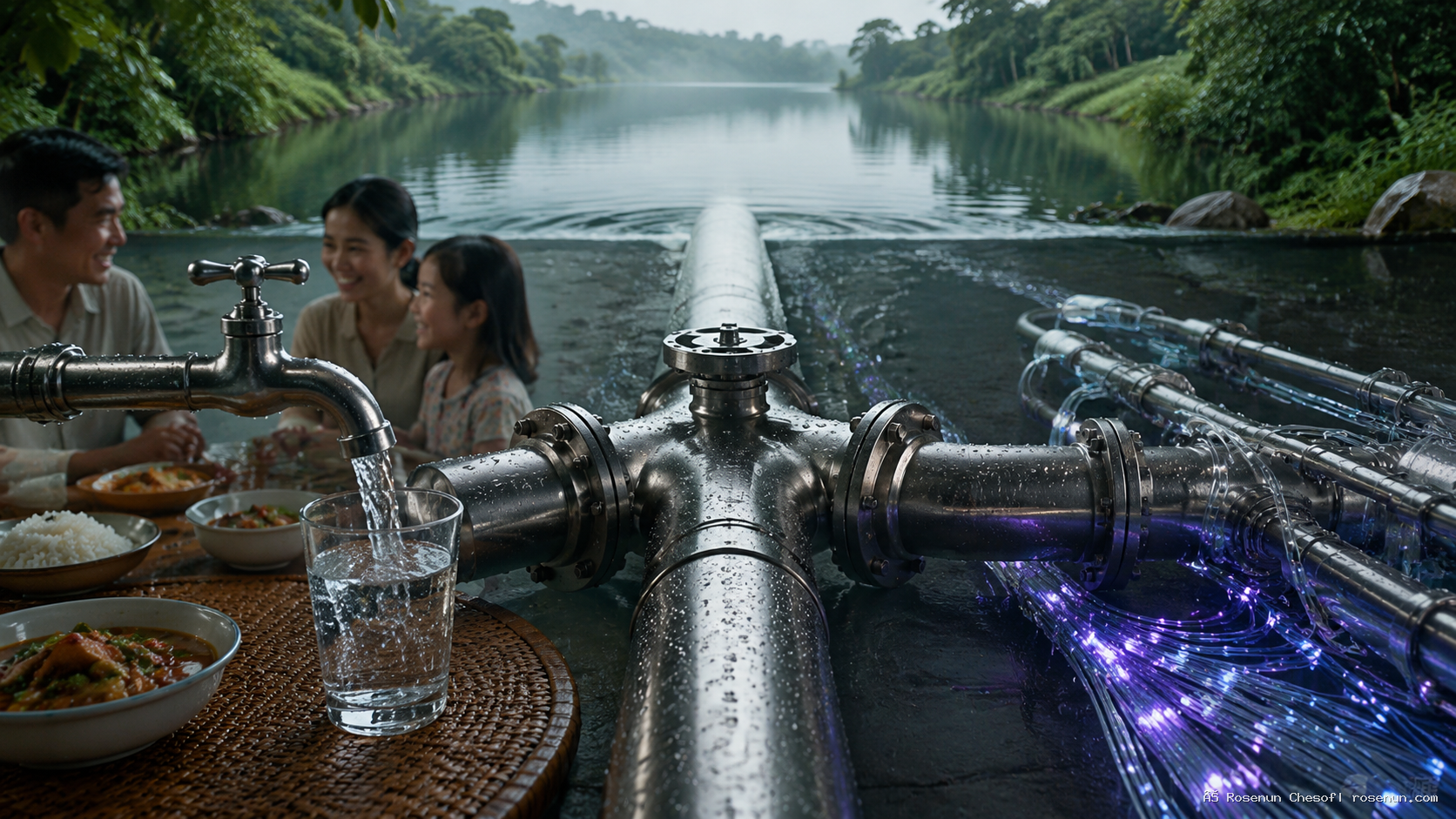
At around the same time, the Johor state and federal governments committed approximately RM5 billion to the construction of three reservoirs and three water-treatment plants. These facilities are not being built solely for data centres. Johor’s population, cities, factories and economic zones are all expanding. The rapid arrival of data centres, however, has introduced a major new source of demand into a water system already expected to support growth across many sectors.
Johor’s data-centre story is therefore about more than technology or the water needed to keep servers cool. It raises broader questions about economic development, the allocation of natural resources and Malaysia’s ambition to move from being a user of global technology to becoming a significant participant in the regional AI industry.
How Many Data Centres Does Malaysia Have?
There is no single answer because different sources count different things. Some include only facilities already in operation, while others also count sites under construction and projects still in the planning pipeline.
In December 2025, Garasi Bernama used information from Data Center Map to identify 123 data-centre sites across Malaysia. This did not mean that all 123 were operational. The total included active facilities, projects under construction and announced developments.
Data-Centre Sites
| Location | Number | What the figure includes |
|---|---|---|
| Malaysia | 123 sites | Operational facilities, sites under construction and planned developments |
| Selangor | 50 sites | Part of the national total of 123 and inclusive of all development stages |
| Johor | 43 sites | Part of the national total of 123 and inclusive of all development stages |
| Johor: operational facilities | Approximately 15 sites | Facilities already operating in early 2026; included within Johor’s total of 43 |
The simplest way to read these figures is that Malaysia had 123 listed data-centre sites at various stages of development. Forty-three were in Johor, of which approximately 15 were already operating in early 2026. The remainder were under construction or at other stages of development.
Projects and Investment
| Period | Investment data | What the figure means |
|---|---|---|
| 2021–June 2025 | 143 approved projects worth approximately RM144.4 billion | Approved investment projects, not 143 operational data centres |
| First half of 2026 | RM95.8 billion in approved data-centre and cloud investment | Almost 44 per cent of all investment approved in Malaysia during the same period |
The 143 approved projects should not be compared directly with the 123 sites. They are different units of measurement. An investment project may involve a new facility, an expansion of an existing campus or another phase of a development already under way.
The two sets of figures tell different parts of the story. The first shows the physical footprint and geographical concentration of Malaysia’s data-centre industry. The second reveals the scale and speed of the capital now flowing into it. As approved projects move from investment plans to operating facilities, their demand for electricity and water will grow accordingly.
Why Johor?
Malaysia’s early data centres were concentrated around Kuala Lumpur and Cyberjaya, where telecommunications infrastructure, government institutions, banks and major corporations were already established. As the industry’s demand for land and power increased, Johor began to acquire a more prominent role.
Its greatest advantage is its proximity to Singapore, one of Asia’s leading financial centres and digital-connectivity hubs. A facility located across the border in Johor can maintain low-latency connections with Singapore while benefiting from cheaper land and lower operating costs.
Investment accelerated after Singapore imposed a moratorium on new data-centre development between 2019 and 2022 amid concerns about land, electricity and water. Technology companies and data-centre operators began looking for suitable sites nearby, and southern Johor emerged as a natural alternative.
Amazon, Microsoft, Tencent, Alibaba, AirTrunk, Bridge Data Centres, DayOne and other major players have since invested in or announced projects in Malaysia. Reuters reported that Johor attracted approximately US$35 billion in data-centre investment following Singapore’s moratorium. If developments currently planned or under construction proceed as expected, the state’s data-centre capacity could rise eightfold to about 7,000 megawatts.
The Johor–Singapore Special Economic Zone, or JS-SEZ, further strengthens the state’s position. It places southern Johor within a cross-border economic corridor connecting manufacturing, logistics, finance and digital services. Johor is therefore no longer merely absorbing projects that Singapore lacks the land or power to accommodate. It is being positioned as a significant component of an integrated regional economy.
Malaysia Wants More Than Warehouses for Servers
The government’s interest in data centres extends beyond the buildings themselves and the investment figures attached to them. Data centres provide the physical foundation for cloud computing, digital banking, e-commerce, government systems, data analytics and AI. Without sufficient domestic computing capacity, many of these services must rely on infrastructure located abroad.
Malaysia is therefore attempting to build a wider digital ecosystem. This includes fibre networks, 5G connectivity, electricity and water, data centres, cloud providers, the semiconductor industry, cybersecurity, software developers, universities, skilled workers and companies capable of turning data and AI into products of their own.
In August 2025, the government introduced the National Cloud Computing Policy, or NCCP, with the ambition of establishing Malaysia as a leading regional cloud and digital hub by 2030. The policy treats cloud computing as more than an investment opportunity. It also addresses data sovereignty, privacy, access for small and medium-sized enterprises and the environmental sustainability of cloud infrastructure.
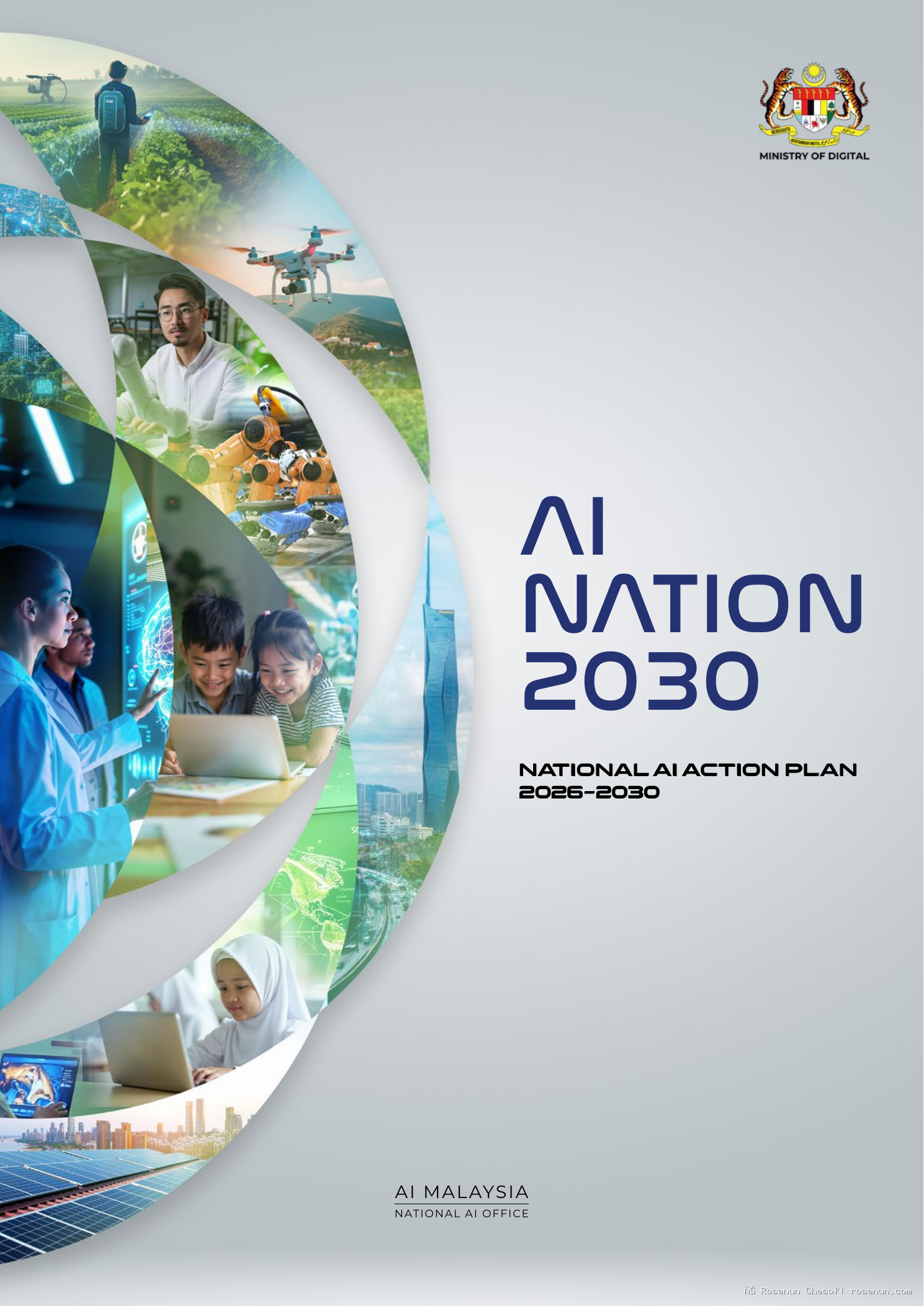
In July 2026, the government launched the National AI Action Plan 2026–2030 and established AI Malaysia Berhad as the central body responsible for coordinating the national AI agenda. The plan aims to place Malaysia among the top ten countries in the Global AI Index by 2030. It also seeks to increase economic growth attributable to AI by 1.2 percentage points and create 300,000 AI-related jobs.
Budget 2026 included a proposed RM2 billion investment in a Sovereign AI Cloud, intended to provide computing infrastructure capable of storing and processing important data under Malaysian governance.
Seen within this policy framework, data centres form the foundation of the national AI agenda. Without computing power, cloud services and storage capacity, Malaysia’s broader AI ambitions would be difficult to realise.
Connecting Malaysia’s Semiconductor Base to AI
Malaysia possesses an advantage that many newcomers to the digital-infrastructure industry do not: an electrical, electronics and semiconductor sector developed over several decades.
The country accounts for approximately 13 per cent of global back-end semiconductor testing and packaging and more than 7 per cent of global semiconductor trade. It also has a substantial network of precision-engineering, automation, equipment-manufacturing and maintenance companies supporting the chip industry.
This industrial foundation creates opportunities to connect semiconductors with the growth of data centres and AI. The potential value chain stretches from chip design and server assembly to electrical systems, cooling technology, software and cloud services.
Yet Malaysia’s established role in assembling and testing chips does not mean that it can already design the most advanced AI processors. Nor does the presence of numerous data centres automatically turn the country into a producer of AI technology.
A data centre may be physically located in Malaysia while its chips, software, AI models, data and intellectual property remain entirely foreign-owned. Without meaningful participation by Malaysian companies, universities and skilled workers, the country risks becoming a convenient location for computers that consume Malaysian resources while primarily serving customers elsewhere.
An ecosystem involves more than placing related industries near one another. Its different parts must interact in ways that create knowledge, technology, high-skilled employment and locally owned businesses.
From Attracting Investment to Choosing It
Malaysia initially attracted data-centre investment through affordable land and energy, tax incentives and its connectivity with Singapore. As the number and scale of proposed projects increased, however, the government began moving from a policy of rapid expansion towards a more selective approach.
The Data Centre Task Force was established in 2025, bringing together the Ministry of Investment, Trade and Industry, the Ministry of Digital and other relevant agencies. The Malaysian Investment Development Authority, or MIDA, acts as the principal coordinating body so that investment approval is considered alongside the availability of water, power and supporting infrastructure.
In August 2026, MIDA stated that projects would only be approved if they could demonstrate secure access to electricity and water, compliance with environmental requirements and meaningful links to Malaysia’s domestic supply chain.
Since February 2026, the government has also restricted new data-centre investments not connected with AI, giving priority to projects regarded as offering greater economic value. This reflects a concern that Malaysia should not commit large quantities of land, electricity and water merely to become a low-cost storage location for global data.
The distinction between an “AI data centre” and a conventional one is not always clear, however. Colocation providers may host multiple customers, and the workloads running inside their facilities can change over time. Describing a project as AI-related does not by itself prove that it will generate high-value economic activity, use resources efficiently or create opportunities for Malaysian companies.
A better assessment must consider how much water and electricity a project will consume, the kinds of jobs it will create, whether technology will be transferred and how far Malaysian businesses will participate in its value chain.
Where Water Enters the AI Equation
Servers operating together in large numbers generate a continuous flow of heat. If temperatures rise too far, equipment can slow down, fail or shut down entirely. Cooling is therefore as essential to a data centre as computing and electricity.
Some facilities use circulating water to absorb heat before releasing it through cooling towers. As part of the water evaporates, a fresh supply must continually be added. Other facilities rely on closed-loop systems that reuse the same water, liquid-cooling technology positioned close to the processors, or air-based cooling.
None of these systems is without trade-offs. A design that consumes less water may require more electricity, while an energy-efficient evaporative system may use more water. Energy and water efficiency therefore need to be evaluated together.
Water is also consumed indirectly in the generation of electricity. The total water footprint of computing consequently varies according to the cooling system, climate, server efficiency and source of power.
For this reason, there is no universally valid answer to the popular question of how much water a single AI query consumes. Research by Lawrence Berkeley National Laboratory shows that the water used by computing workloads can vary enormously according to location, technology and operating conditions.
The more useful policy question is not whether individual users should feel guilty about asking an AI system a question. It is whether major operators—who can choose their cooling technology, water source and facility location—are being held accountable for the resources they consume.
Eighteen Million Litres a Day May Be Only the Beginning
In early 2026, approximately 15 operating data centres in Johor were consuming a combined 18 million litres of water per day. This remained well below the roughly 45 million litres per day that operators had originally requested.
Current consumption may therefore appear manageable. Yet many facilities have only recently opened, are operating below their eventual computing capacity or remain under construction. Today’s figures may not reflect future demand once more servers and customers enter these campuses.
Bank Negara Malaysia has estimated that a 50-megawatt data centre may consume as much electricity each day as approximately 22,000 households and as much water as 2,200 households. Actual consumption varies widely according to the technology used, but the comparison illustrates the resource requirements hidden inside buildings that may appear quiet and employ relatively few people.
As more of Johor’s 43 listed facilities begin operating, the issue will no longer be the 18 million litres being consumed today. The more difficult question is how much water the state must prepare for developments expected to come online over the next several years.
Why Is Johor Building More Reservoirs?
The Johor state and federal governments are investing approximately RM5 billion in three reservoirs and three water-treatment plants. Ranhill SAJ currently operates 47 treatment plants with a combined capacity of approximately 2.35 billion litres per day. Demand from households, expanding cities, the special economic zone, manufacturing and data centres continues to grow.
BIMB Research estimates that Johor may need an additional one billion litres of treated water per day by 2030, over and above projects already under construction.
This does not mean that all the additional water will go to data centres. Demand is increasing across many sectors. But data-centre expansion has introduced a new category of large-scale users at the same time that Johor is accelerating industrial and urban development elsewhere.
Potential raw-water sources such as Sungai Sedili Besar and Sungai Endau are located far from the major industrial clusters in southern Johor. Bringing that water south would require new storage capacity, treatment plants and long-distance pipelines—all of which demand considerable money and time.
Reservoir construction is therefore not merely an engineering matter. It is also a question of who should pay for new infrastructure. If part of this expansion is required to serve large technology companies, should those companies contribute more than ordinary water users?
There is another risk. If the state builds its water system according to the capacity requested by data-centre operators, but the facilities ultimately consume far less than anticipated, the public could be left paying for infrastructure that is not fully used. Policymakers must therefore distinguish between electricity and water reserved in advance and demand that is likely to materialise.
When Digital Growth Becomes a Local Issue
In February 2026, residents of Iskandar Puteri protested against the construction of a data-centre development. Their concerns included construction dust, health problems, land clearance and the possible effects of the project on local water supply and pressure.
The operator responded that the data centre had not yet begun operating and could not have caused the existing water problems. The episode nevertheless exposed a gap between the national policy narrative surrounding the digital economy and the experience of people living near the projects.
At the national level, data centres represent investment, AI capability and economic competitiveness. For nearby communities, the same developments may mean disappearing green space, dust, lorries, new transmission infrastructure and another large user entering the local water system.
Public acceptance cannot be secured through investment announcements alone. Communities need access to information about how much electricity and water each project will use, where those resources will come from, who will pay for additional infrastructure and what benefits the surrounding area will receive.
Reclaimed Water, Renewable Energy and New Conditions for Investment
Malaysia has started developing rules to manage the industry’s environmental impact. In December 2024, the Ministry of Investment, Trade and Industry introduced the Guidelines for Sustainable Development of Data Centres, covering energy and water efficiency, carbon emissions and the use of renewable power.
The government also uses the Digital Ecosystem Acceleration Scheme, or DESAC, to offer tax incentives to digital investments that meet efficiency and sustainability requirements. Through the Corporate Renewable Energy Supply Scheme, or CRESS, data-centre operators can purchase renewable electricity from third-party producers.
On water, the National Water Services Commission, or SPAN, has issued guidance encouraging data centres to use alternative sources, prioritising treated wastewater where available and cooling systems that reduce their reliance on potable water.
Several Johor operators have begun moving in this direction. Bridge Data Centres built a water-reclamation facility in Ulu Tiram that receives treated effluent from Indah Water Konsortium and processes it further for use in cooling. ZData/Computility Technology in Gelang Patah combines reclaimed water with rainwater harvesting and estimates that this could reduce its use of potable water by approximately 57 per cent.
Reclaimed water is more expensive to use because operators must invest in additional filtration, pipelines and quality-control systems. That cost, however, should be treated as part of doing business. It should not be shifted to the public water system and its ordinary users simply because treated drinking water is cheaper and more convenient.
More Data Centres Do Not Automatically Create an AI Ecosystem
Data-centre development can generate construction work and demand for engineers, contractors, electrical equipment, cooling technology, security and maintenance services. It may also create opportunities for local manufacturers and service providers to enter an international supply chain.
Once construction is complete, however, a data centre may employ fewer permanent workers than a manufacturing plant involving a similar level of investment. Its value cannot therefore be judged solely by the amount of capital announced or the number of buildings constructed.
The more important question is whether Malaysia can use this infrastructure to move into higher-value activities: chip design, domestic cloud services, AI model development, data management, research, specialised software and technology companies capable of competing internationally.
If it succeeds, the electricity and water committed to data centres could help build new national capabilities. If the facilities remain largely server warehouses for foreign companies while profits, technology and intellectual property stay overseas, Malaysia may receive less value than the resources it supplies.
Building a genuine AI ecosystem therefore requires more than attracting global cloud and data-centre operators. Malaysia must develop its talent, connect universities with industry, give local businesses access to computing capacity, support research and ensure that foreign investment creates substantive links with the domestic economy.
Johor’s Water Future Is Also a Test of Digital Policy
The need for new reservoirs and water-treatment plants is a reminder that the digital economy does not exist in a virtual realm. Countries seeking to host cloud services and AI infrastructure must provide physical resources on a scale comparable to that required by factories, cities and major industrial zones.
Johor does not have to choose between accepting every proposed data centre and rejecting the industry altogether. The more important choices concern which projects should be accepted, where they should be located, which water sources they should use and how much value they will create for the local economy.
The number of data centres is not, by itself, a measure of success. Nor can investment totals reveal how much technology, knowledge, high-skilled employment or locally owned business the country will ultimately gain.
If Malaysia intends to become an AI Nation by 2030, success should not be measured simply by how many data centres stand within its borders. It should be measured by the country’s ability to turn that infrastructure into wider public value—without forcing communities to compete with computers for water and electricity.
Johor’s water future is therefore not an environmental issue separate from Malaysia’s AI agenda. It is a test of whether the country can govern digital growth on its own terms, or whether the demands of the technology industry will determine how much land, power and water Malaysia must place at its disposal.
Sources
Garasi Bernama — The Rise of Data Centres: Can Malaysia’s Power Grid Cope?
MIDA — Malaysia Secures RM218.5 Billion in Approved Investments in 1H 2026
Ministry of Digital — National Cloud Computing Policy
AI Malaysia — National AI Action Plan 2026–2030
Ministry of Digital — Budget 2026 and Malaysia’s Digital Transformation
MIDA — Sustainable Infrastructure, Local Impact
MIDA — Malaysia’s Semiconductor and Engineering Support Ecosystem
Reuters — Malaysia’s Resource Anxiety Tests Asia’s Fastest Data Centre Build-out
Bernama — Allaying Johor Data Centre Water Fears
The Star — Johor Data Centre Water Demand to Accelerate
The Edge Malaysia — Using Reclaimed Water to Cool Data Centres
Lawrence Berkeley National Laboratory — The Water Use of Data Center Workloads