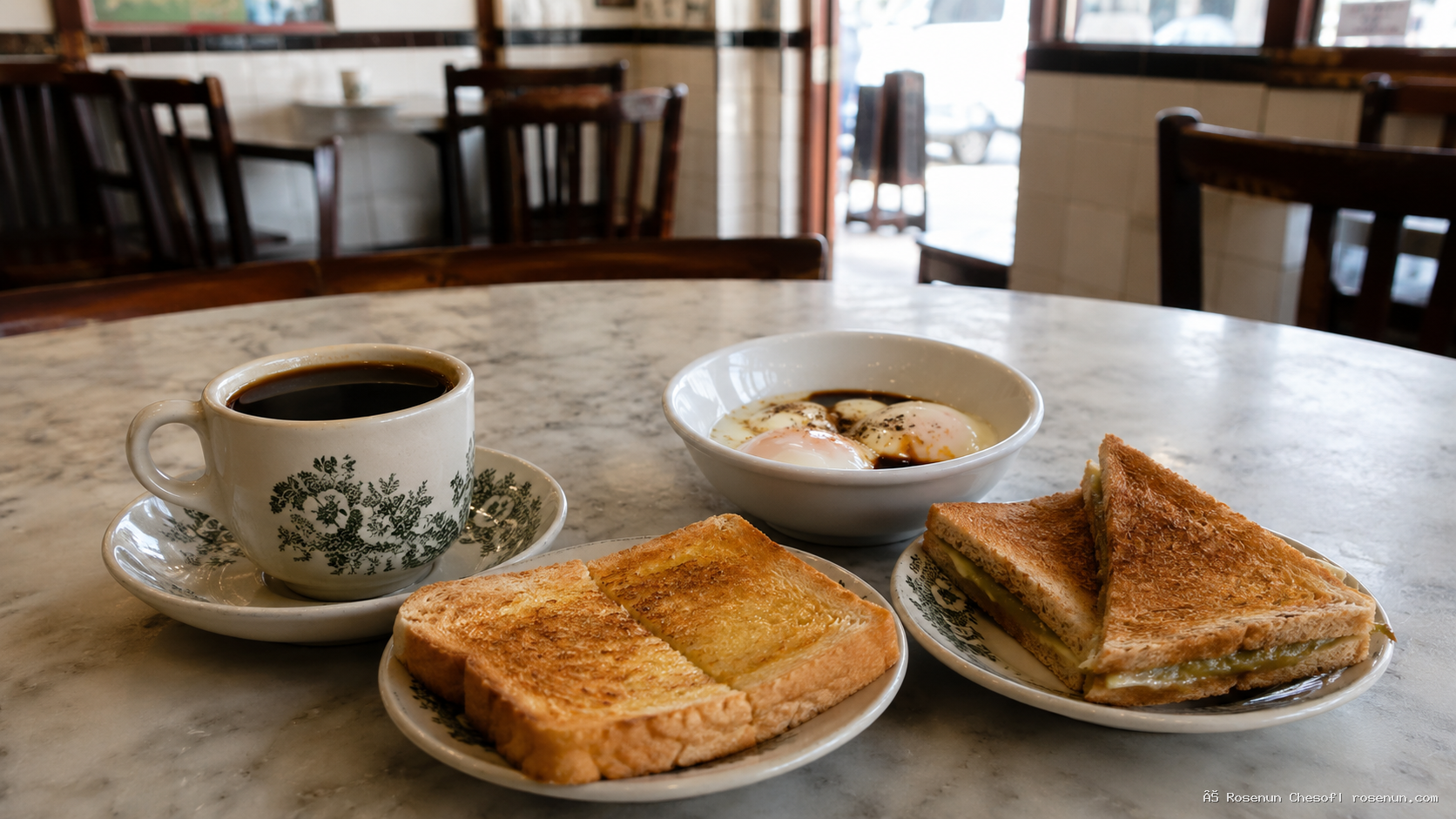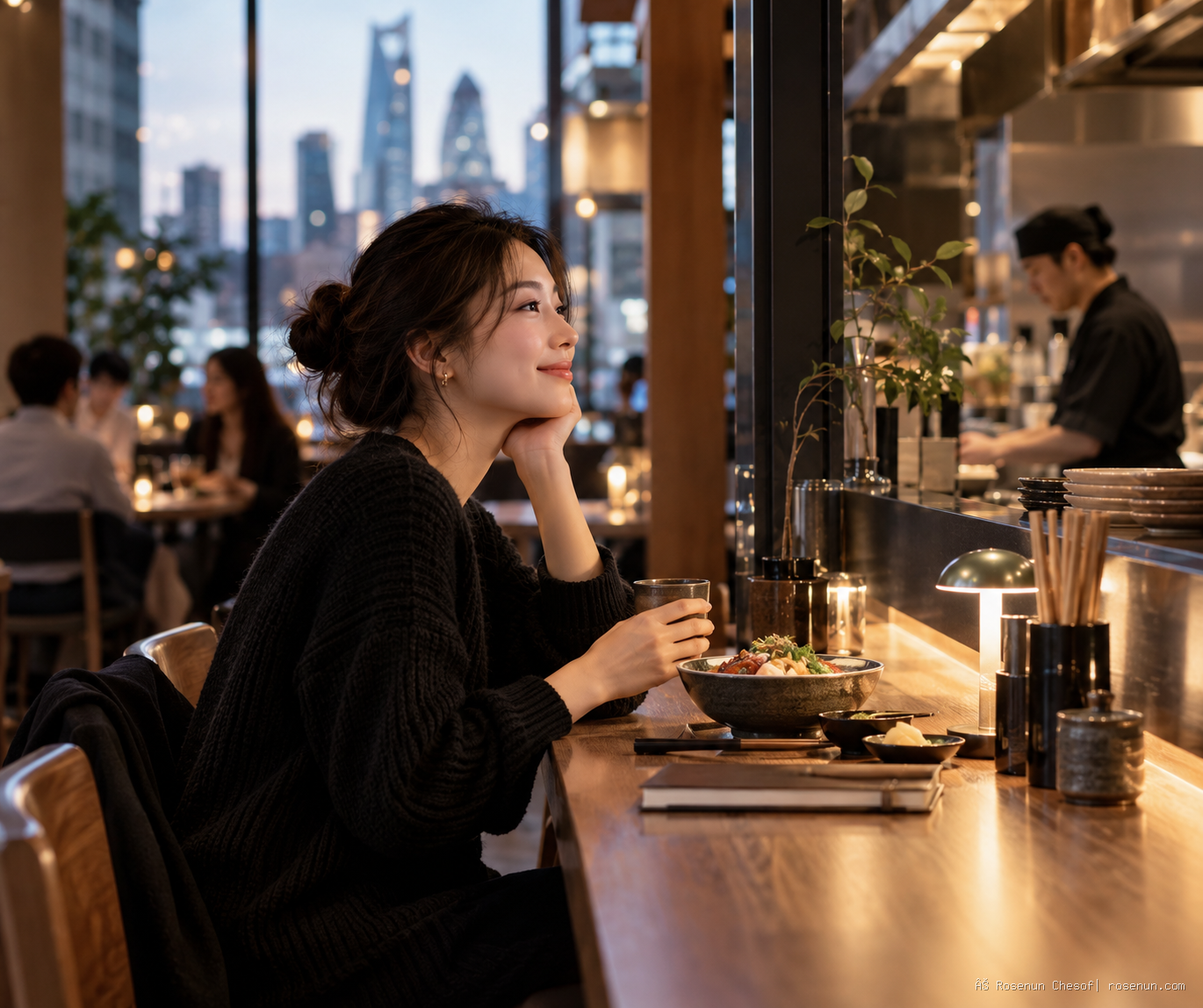
Walk into a restaurant in almost any major city today and a solo diner barely attracts attention. Someone might be reading a book over lunch, answering emails between courses, scrolling through a phone, or simply enjoying the food in front of them.
They may be single.
Or they may have a partner, a family, plenty of friends and an active social life.
They simply happen to want dinner alone tonight.
And there is a considerable difference between having to eat alone and choosing to.
When a Table for One Becomes Normal
Search for solo dining in London, solo dining in Singapore, or replace the city with Tokyo, Seoul or New York, and you will find something that would once have seemed rather unusual: entire restaurant guides written specifically for people dining alone.
There are recommendations for restaurants with good counter seats, places where a reservation for one is easy to make, and dining rooms where arriving alone feels entirely natural. In London, restaurant guides have even highlighted Michelin-recommended establishments particularly suited to solo diners.
The restaurant industry has clearly noticed something.
A solo diner is no longer treated simply as half of a table for two.
Counter seating, bar seats, compact tables and open kitchens all make it easier for one person to occupy a space without feeling conspicuous. Meanwhile, ramen, sushi, omakase, small plates and individually portioned menus fit naturally into a style of dining that does not require food to be shared.
Perhaps eating alone has become more comfortable not only because our attitudes have changed.
The spaces around us have changed too.
In Some Places, Eating Alone Was Never Particularly Strange
Japan offers an obvious example.
Solo dining there did not begin with social media or a new generation discovering the pleasures of independence. Ramen counters, sushi bars, soba and udon shops, and restaurants built around counter seating have long made it perfectly ordinary for one person to walk in, eat and leave without needing company to justify the experience.
South Korea has even developed a familiar word for the practice: honbap (혼밥), literally eating alone.
Its rise also reflects broader changes in the way people live. More than one-third of South Korean households are now single-person households, creating demand for everything from smaller food portions to restaurants designed with individual customers in mind.
Thailand is moving in a similar direction. According to the National Statistical Office, single-person households increased from 22.3% in 2021 to 26.5% in 2024—more than one in four households.
As people marry later, move to cities for work, travel independently and organise their lives around increasingly individual schedules, businesses inevitably respond.
But demographic change explains only part of the story.
Because many people who enjoy eating alone do not actually live alone—and are not single.
Having a Partner Doesn't Mean Sharing Every Meal
We often attach certain activities to relationship status without really questioning why.
Real life is rarely that tidy.
One person wants sushi; the other wants Indian food. One wants to go out; the other would rather stay home. And sometimes there is no disagreement at all. You simply want an hour in which you do not have to talk to anyone.
No discussion about where to eat.
No waiting for someone else to get ready.
No negotiating over a restaurant everyone can agree on.
No need to stay longer because someone else has not finished.
For people who value personal space, spending time alone is not necessarily a rejection of a partner, family or friends. It can simply be a way of preserving a small part of life that belongs entirely to oneself.
Loving someone does not require spending every available moment together.
Alone Is Not the Same as Lonely
This may be the most important distinction of all.
Being alone and being lonely are not interchangeable.
Someone can sit at a crowded dinner table and feel profoundly isolated. Another person can be eating ramen alone on a Tuesday evening and be perfectly content.
Research into solitude presents a more complicated picture than the familiar assumption that time alone is inherently unhealthy. Too much involuntary isolation can certainly be associated with loneliness and lower well-being. But chosen solitude can also offer benefits, including lower stress and a stronger sense of autonomy.
The crucial question is often whether being alone is something we have chosen.
There is a world of difference between:
“I have to eat alone because there is nobody to go with me.”
and:
“I feel like eating alone tonight.”
From across the restaurant, the two scenes look identical: one person, one chair, one plate of food.
Inside that person's mind, they may be completely different experiences.
Restaurants Have Learned This Too
The fact that we can now search for best restaurants for solo dining in cities around the world and immediately find recommendations says something about how far attitudes have shifted.
Restaurants with counters, single reservations, individual portions and seating designed so that one person does not feel awkward are responding to a lifestyle that already exists.
Perhaps the restaurants that understand solo diners best are not the ones that announce themselves as “solo-diner friendly” at all.
They are the places where nobody needs to think about it.
You walk in.
You sit down.
You order what you want.
You eat.
You pay.
You leave.
Just like everybody else.
A Table for One Doesn't Mean Someone Is Missing
Of course, not everyone enjoys eating alone.
For many people, sharing a meal is one of life's great pleasures. Conversation across the table, passing dishes around, arguing over the last piece of dessert, or telling someone about your day can matter as much as the food itself.
Loneliness is real, too. There is little value in romanticising solitude as though everyone ought to enjoy it.
Perhaps what has changed is something much simpler.
We no longer need to decide what a person sitting alone must be feeling.
They might be lonely.
They might be waiting for someone.
They might have just ended a relationship.
They might have been happily married for twenty years.
Or they might simply be having an excellent dinner.
The next time a host asks,
“How many?”
we might instinctively answer:
“Just one.”
But there is something curious about the word just. It makes one sound incomplete, as though another person should have been there but failed to arrive.
As tables for one become an increasingly ordinary part of life in cities around the world, perhaps we no longer need that word.
“One, please.”
And sometimes, no one is missing from that table at all.