Abstract
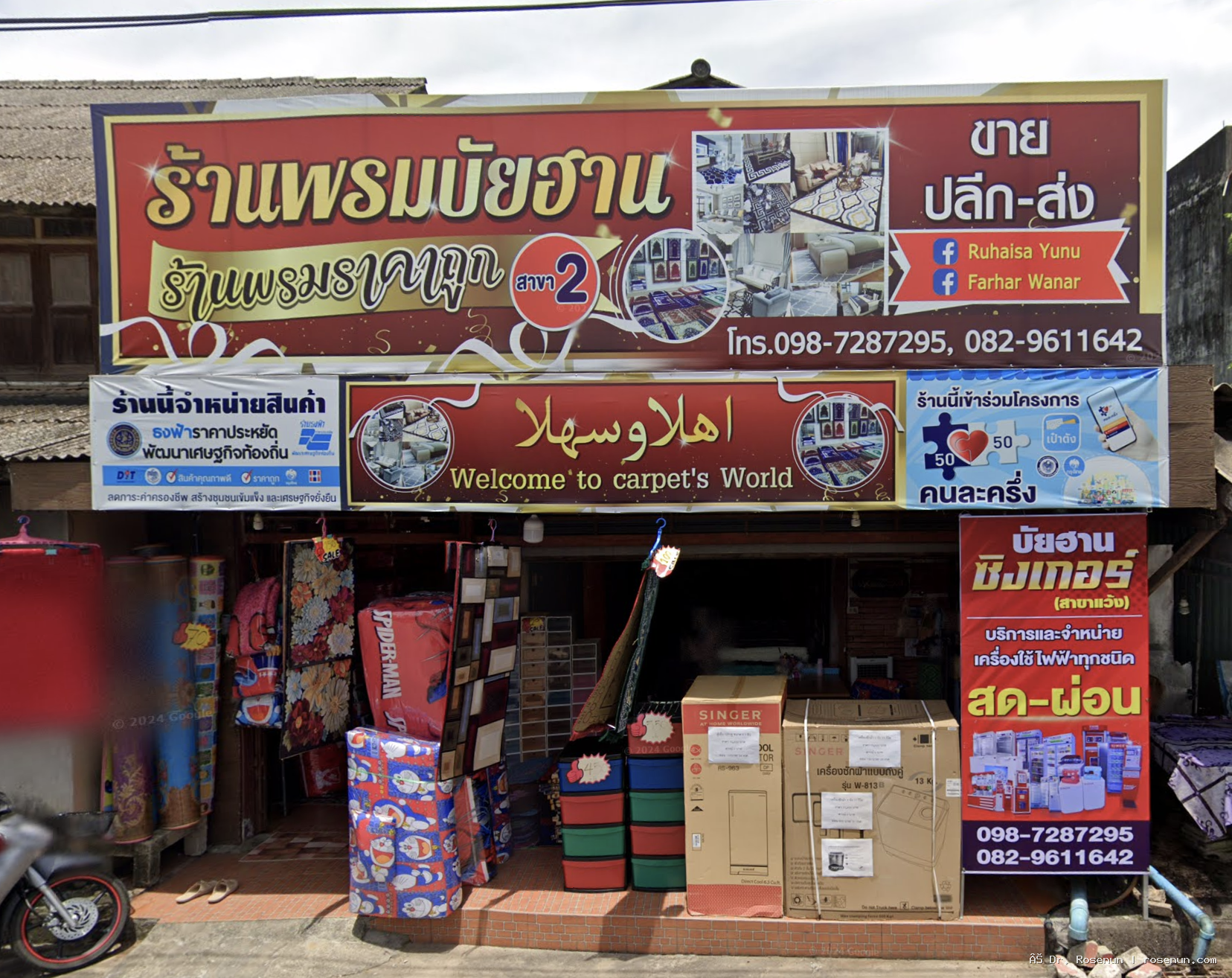
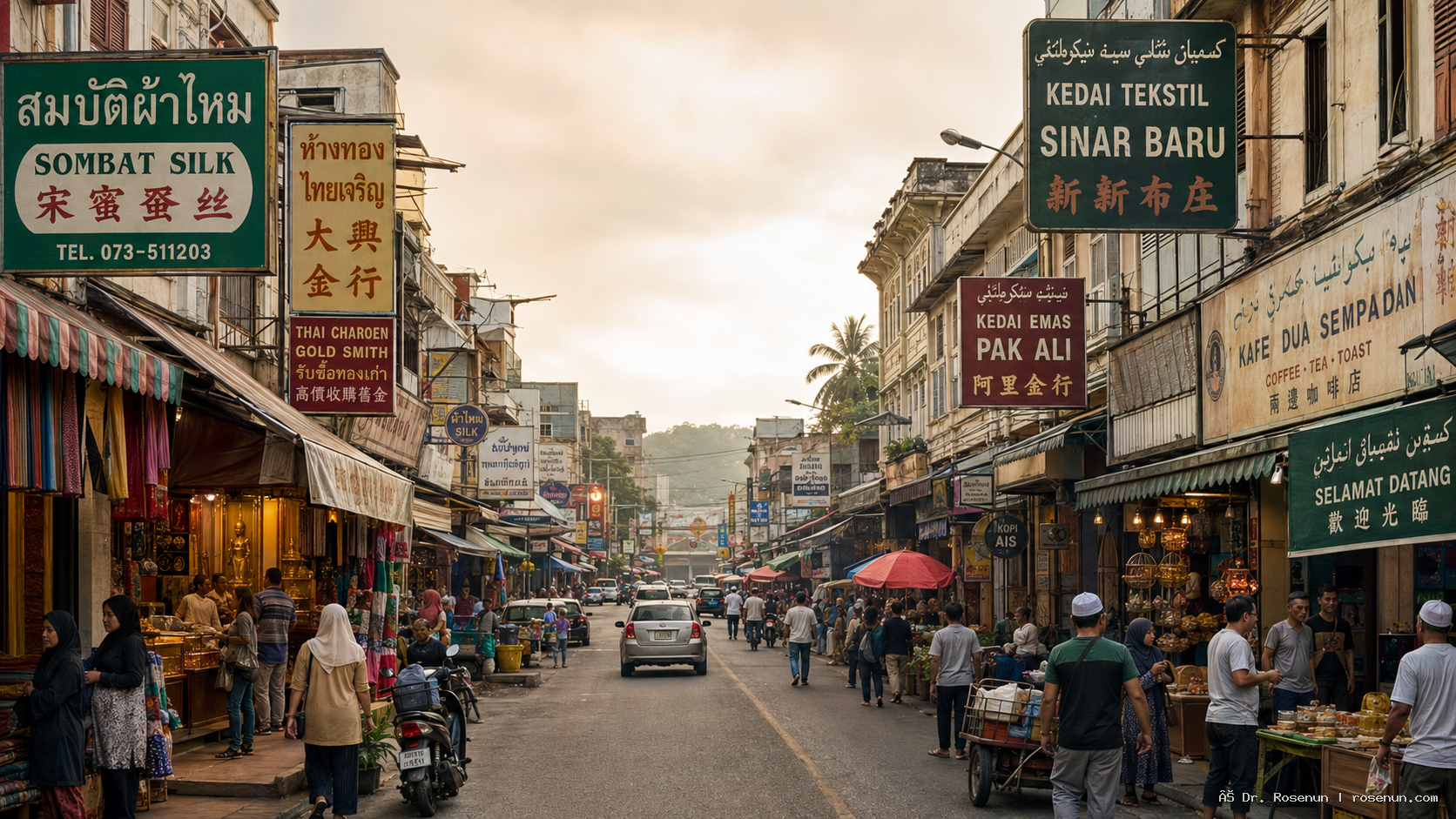
This paper presents a comparative linguistic landscape (LL) analysis of advertisement signage in the Thailand-Malaysia border region, focusing on the visibility of languages, script usage, and ideological implications in public space. Grounded in Spolsky and Cooper’s (1991) theory of language use and Shohamy’s (2006) concept of LL as an ideological mechanism, the study examines 585 signs collected from eight towns across the border area. Findings reveal distinct national patterns: in Thailand, signage is predominantly monolingual, reflecting a centralized language policy that prioritizes Thai as a symbol of national identity. In contrast, Malaysia's signage displays rich multilingualism—including Malay in both Rumi and Jawi scripts, English, Chinese, and Tamil—particularly in Kelantan where Jawi represents Islamic cultural identity. These differences underscore how signage serves not only commercial functions but also reflects sociopolitical ideologies, religious identities, and language policies. The study highlights the role of public signage as a visual arena where commerce, culture, and policy intersect in complex borderland contexts.
Full paper: URL https://wjst.wu.ac.th/index.php/stssp/article/view/25870