The Origins: Kura Kura Bali and Tsinghua University
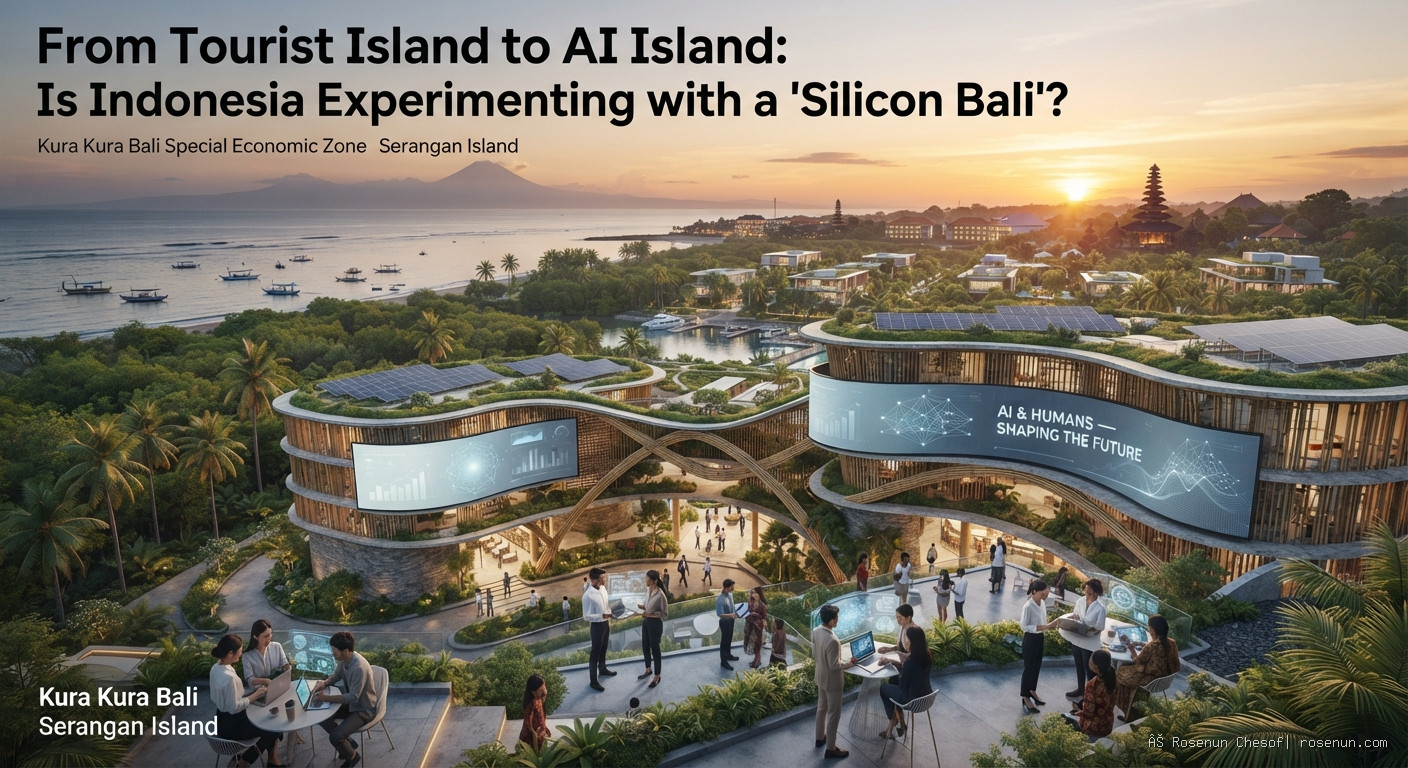
This initiative traces back to the Kura Kura Bali Special Economic Zone (known locally as Kawasan Ekonomi Khusus (KEK) Kura Kura Bali), situated on Serangan Island in southern Denpasar. Designated as a special economic zone by the Indonesian government in 2023, the development plan goes beyond tourism and creative industries to integrate top-tier educational institutions. A prime example is the Tsinghua Southeast Asia Center, which broke ground in 2018 and officially opened in 2022—long before Generative AI dominated global conversations.
Momentum picked up in August 2026, when Tsinghua University and the University of Hong Kong hosted the international conference "AI & Humans — Shaping the Future" at the center. By October 2026, Luhut Binsar Pandjaitan, Chairman of Indonesia's National Economic Council, actively called for Tsinghua to deepen its involvement in AI research in Bali.
Why Bali?
If Indonesia aims to build a thriving AI industry, why bypass major economic hubs like Jakarta or Bandung, which boast long-standing engineering foundations? The answer lies in Bali’s pre-existing cosmopolitan ecosystem. The island already features an international airport, world-class service industries, and a thriving community of digital nomads, entrepreneurs, and cross-border professionals.
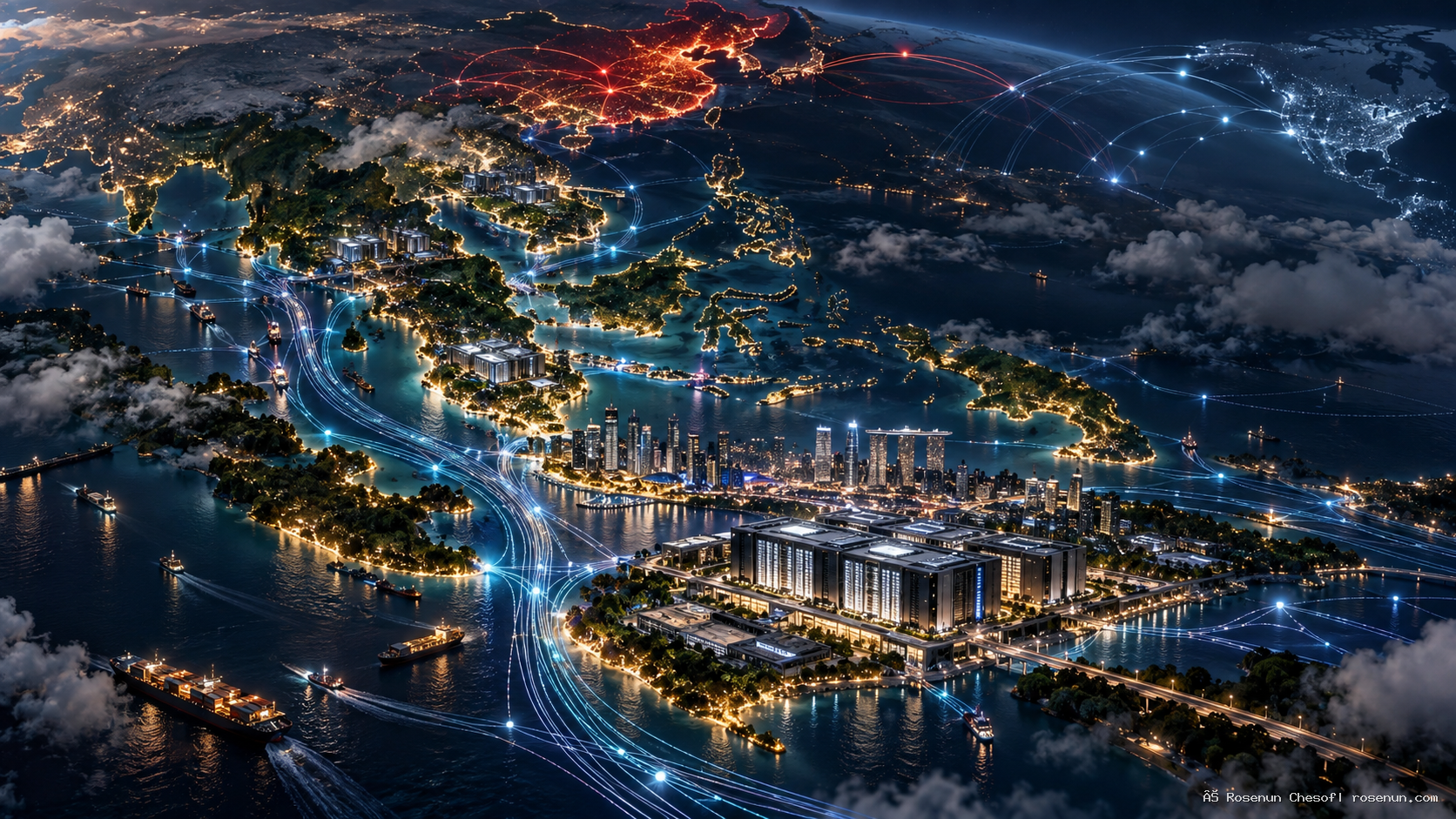
The global race for AI leadership is not solely about hoarding GPUs; it is about attracting top talent to live, work, exchange ideas, and build networks. Bali is thus serving as a living laboratory, weaving together quality of life, education, international networks, research, and creative industries.
Geopolitical Dimensions and China’s Role
The presence of the Tsinghua center introduces an intriguing geopolitical layer. As a cornerstone of China's science and technology infrastructure, Tsinghua’s permanent footprint in Indonesia serves as a direct bridge linking China with students, researchers, and businesses across Southeast Asia. Amid escalating tech rivalries between the United States and China, this allows ASEAN nations to harness foreign collaboration and draw economic benefits inward without being forced into rigid geopolitical alignments.
Paradoxes and Environmental Realities
Despite its promise, Bali remains a far cry from Silicon Valley, which required decades of accumulated venture capital, deep-tech startups, and massive tech conglomerates to mature.
More importantly, AI is underpinned by heavy physical infrastructure—data centers, high-power grids, cooling systems, water resources, and land—posing severe environmental challenges for a fragile tourist island. To counter this, development projects at Kura Kura Bali are attempting to merge AI integration with urban design guided by Bali’s Tri Hita Karana philosophy, which emphasizes spiritual balance among humans, nature, and the cosmos.
Bali in a Decade: Trading the Tangible for the Intangible
Today, travelers visit Bali for its nature, culture, food, and leisure. In the future, a distinct cohort of visitors may arrive to study AI, conduct research, launch startups, or plug into regional tech networks.
Granted, merely inviting Tsinghua to conduct research will not turn Bali into Silicon Valley overnight, and Kura Kura Bali retains a heavy commercial and tourism real estate footprint. Yet, the real transformation to watch is not the headcount of incoming tech firms, but a fundamental shift in what Bali exports to the world. For decades, its core product has been physical places and cultural experiences. If successful, its new export will be intangible: knowledge, human capital, networks, and innovation.
Conclusion: From Selling Places to Producing Knowledge
What Indonesia is attempting in Bali is less an outright replica of Silicon Valley and more a radical inquiry: How can a region build an innovation hub organically using the unique assets it already possesses?
2)https://www.tsinghua.edu.cn/en/info/1244/2945.htm?utm_source=chatgpt.com
4)https://lead.hku.hk/en/article/2026/09/hku-tsinghua-bali/?utm_source=chatgpt.com